Button badges and enamel pins compared
Button badges and enamel pins can carry the same idea, but their construction, fastening and visual character are different.
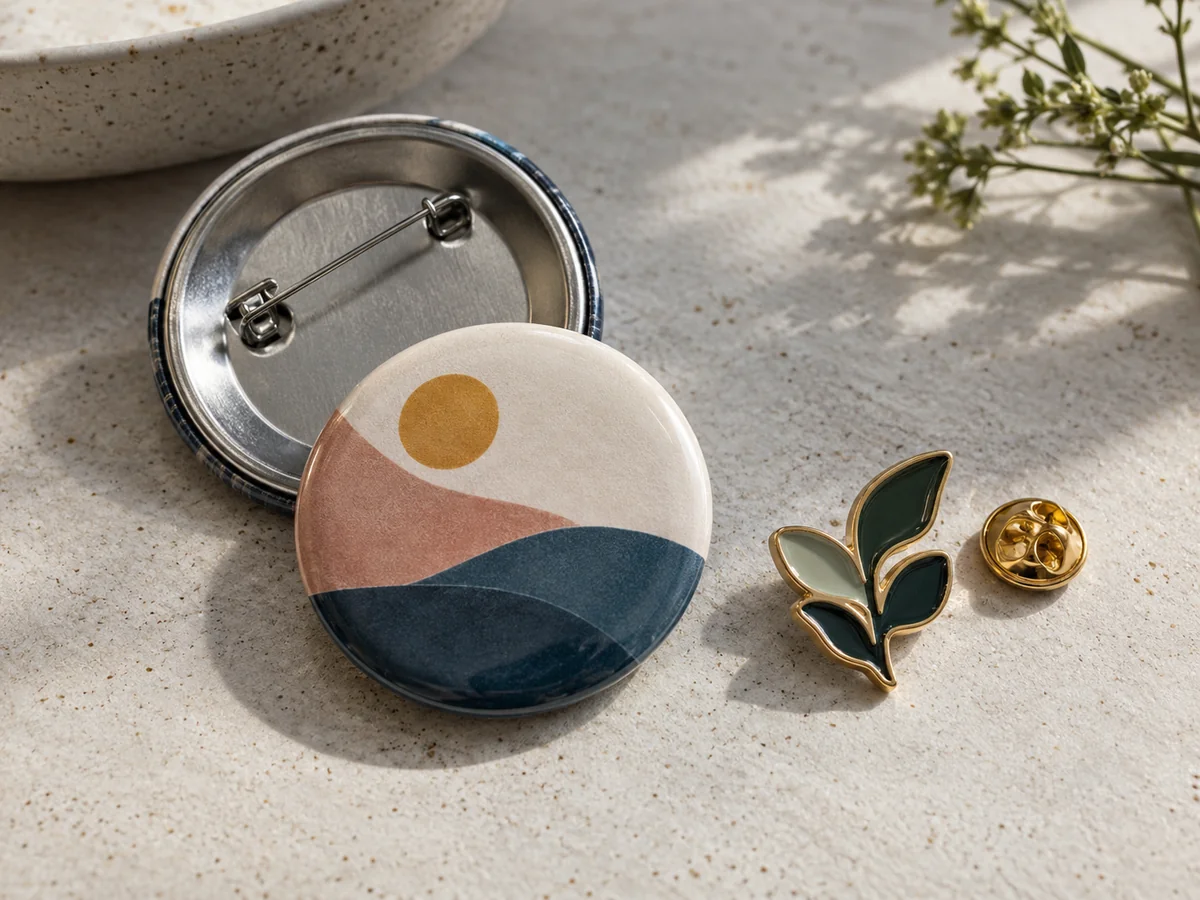
Two ways to make a small statement
A traditional button badge often carries a printed image beneath a protective face, with a pin fastening across the back. An enamel pin usually has a shaped metal body, coloured areas and one or more posts with separate backs. Variations exist in both categories, so look at the actual product rather than relying entirely on its name. A retailer may use badge and pin loosely in the same listing.
The difference is visible in the artwork. Printed badges can suit photographs, gradients and designs with many small colour changes. Enamel designs often use the metal outline as part of their appearance. Neither is inherently more thoughtful or more collectible. Choose the construction that supports the image you like and the way you intend to wear or display it.
Turn the item over
A front photograph does not show how a badge attaches, how thick it is or how its fastening feels against fabric. Look for a clear back view. Check that a button badge's clasp closes properly and that an enamel pin includes the correct back for each post. A missing or damaged fastening is a reason to contact the seller, not to improvise a sharp wire solution.
Consider the item underneath. Both common types puncture fabric, and their fastening arrangements can ask for different access behind it. A small printed badge may sit neatly on a sturdy tote, while a heavier shaped pin may need a supported panel. Coated or delicate fabric deserves particular care because a hole may remain visible or affect the material's performance. A separate pin display can be the easier option.
Choose for the occasion and the afterlife
For a one-day event, a simple printed badge can communicate a name or image clearly without needing a complicated shape. For a piece you will move between outfits, comfortable fastening and a durable finish may take priority. If it is a gift, think about whether the recipient wears badges at all. A design they enjoy may be better as a print or sticker if pinning things to clothes is not part of their routine.
Store either type so the sharp parts cannot scratch neighbouring pieces. Keep the protective face of a printed badge away from rough metal edges, and follow the maker's care advice for enamel and plating. Remove them before laundering the fabric. Comparing a badge with a pin becomes straightforward once you look at the whole object: image, thickness, fastening and the place it will be used. The better choice is the one that makes that particular design easy to enjoy.
Further information