Inspect the small hardware on a bag
Small hooks, rings and buckles deserve inspection because they connect the parts you rely on.
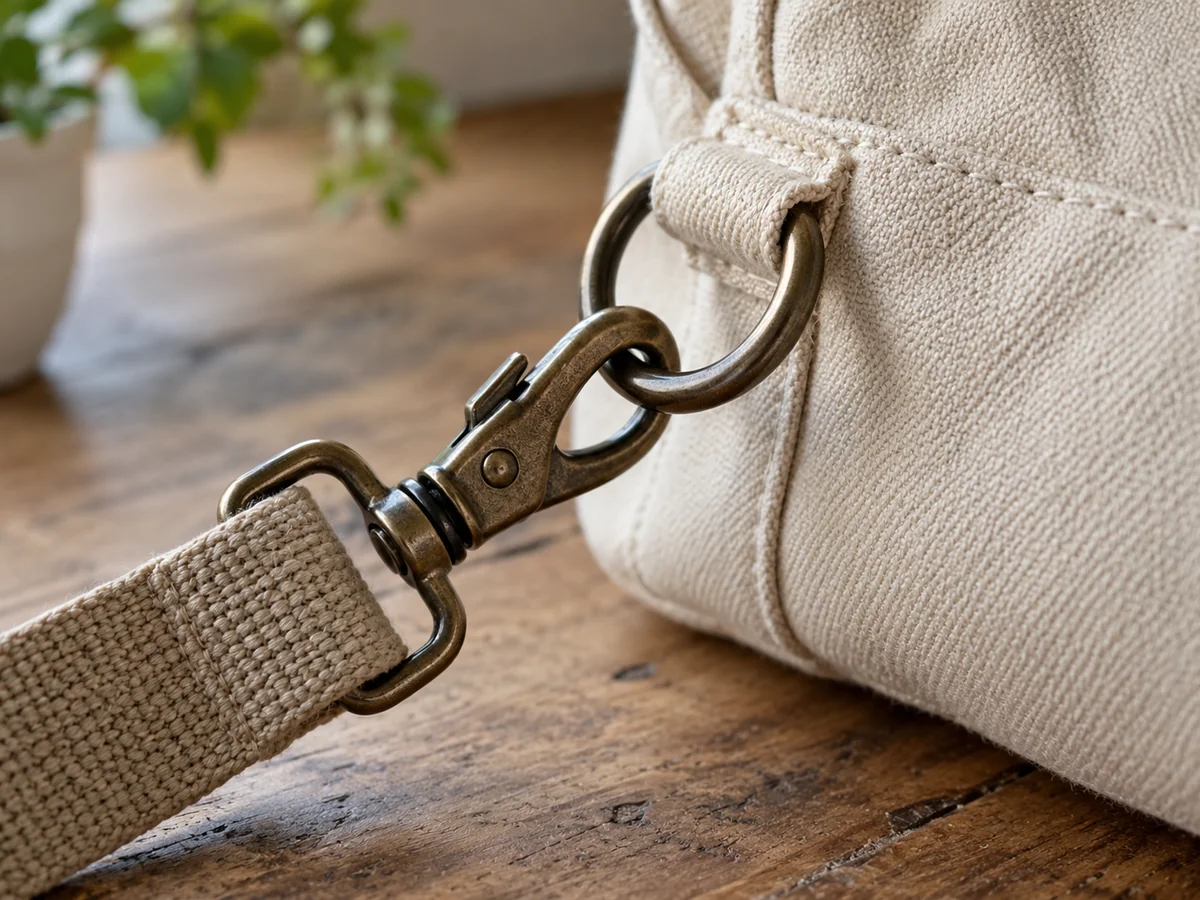
Look where the parts meet
Hardware is often photographed as decoration: a shiny buckle against canvas or a coloured clip at the end of a strap. In use, those pieces have specific jobs. A ring connects the strap to the body, a hook opens and closes, and an adjuster holds a chosen length. Examine each connection rather than deciding that a metal finish automatically makes a bag more durable.
Start with the attachment to the fabric. Is the ring held by a neatly sewn tab? Does the tab sit flat, or is it already being pulled sideways? Hardware can be sound while its surrounding material is weak. A beautifully finished hook is less reassuring if it continually rubs against a narrow edge or twists the tab whenever you lift the bag.
Operate it without forcing anything
Open a detachable hook several times and watch whether the gate returns fully to its closed position. Check for a gap, an awkward catch or a spring that feels inconsistent. Some clips include an additional locking mechanism; learn how it works and whether you can use it with your usual hand. An extra step only helps when it is manageable enough to perform every time.
Run your fingers carefully around accessible edges. Rough burrs can catch cloth, and exposed corners may scratch nearby belongings. A swivel should move as intended without forcing the attached fabric to twist. This is an inspection of everyday function, not a strength test: do not hang heavy objects from a new bag or pull fittings beyond the maker's stated use to see what happens.
Think about replacement and contact
A removable strap creates options, but replacement fittings still need to match. Ring thickness, gate opening and available clearance affect whether a new hook will sit properly. A clip that barely fits can bind against the fabric or stay partly open. Ask for compatibility information before buying a replacement, especially when the connection will carry the entire bag.
The finish can wear where metal repeatedly touches metal. That may be cosmetic, but flaking surfaces, sharp damaged edges or a gate that no longer closes deserve attention. Clean according to the manufacturer's advice rather than applying oil or polish indiscriminately. A treatment suitable for one metal can mark cloth, leather or a coated finish nearby.
Look at noise and placement as well. Two loose rings may knock together beside your ear, while a large buckle can press against your hip when seated. These small irritations rarely appear in a specification. Try the assembled bag with a realistic load, then inspect the fittings again. Good hardware should remain understandable and convenient in the places where your hands and body actually meet it.
Further information