Read bag dimensions beyond the model photo
Use dimensions and a familiar object to judge a bag, since model photographs can disguise its proportions.
The person in the picture is not a ruler
A bag can look compact on one model and generous on another. Camera angle, clothing, the way a strap is held and the distance from the lens all influence that impression. Treat lifestyle photographs as examples of how the bag might hang. For actual fit, begin with written dimensions and identify what each measurement includes.
Height may describe only the body or extend to the top of the handles. Width may be measured across the opening rather than the base. A rounded belt bag might have its greatest depth at the middle, leaving less space near the ends. Look for a diagram or several views, and ask the seller if a measurement could reasonably mean more than one thing.
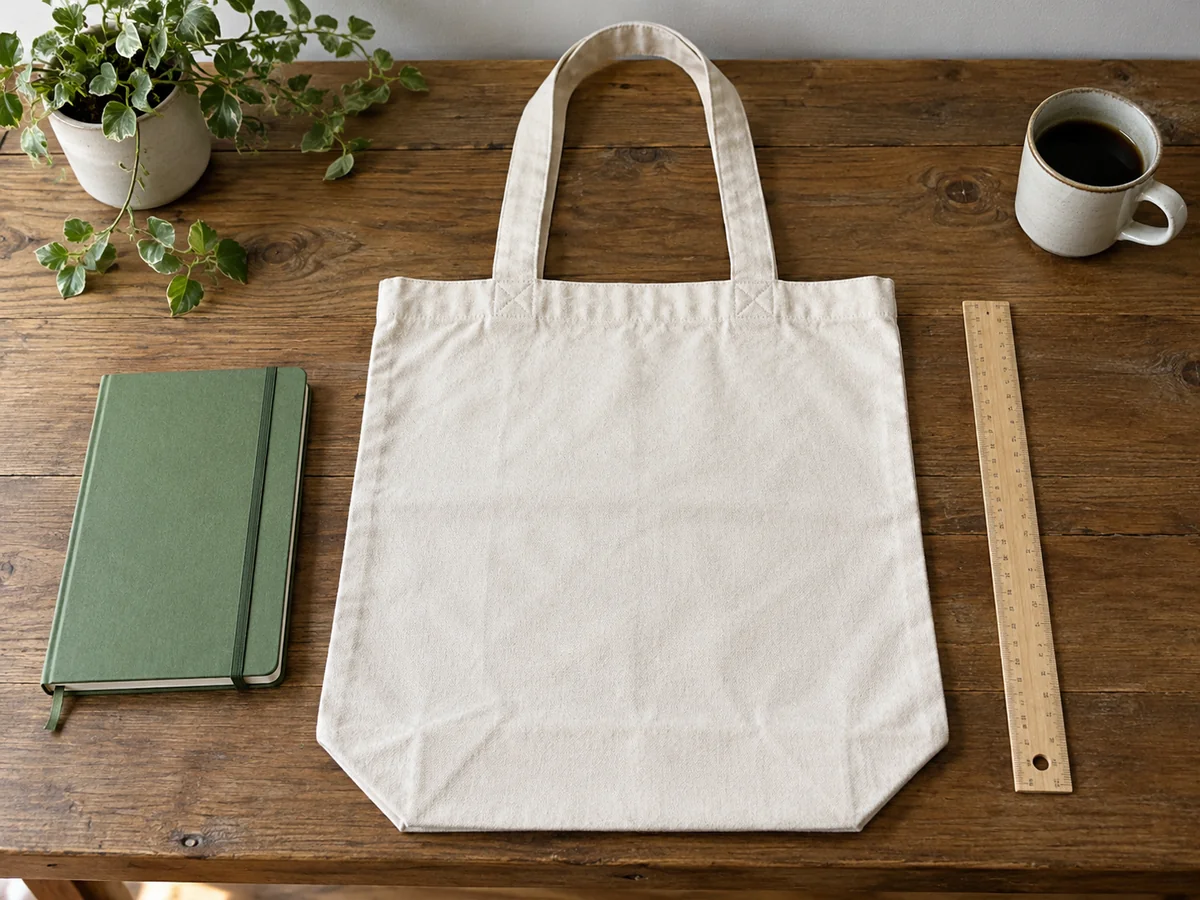
Make the size visible at home
Draw the stated width and height on a sheet of paper, or mark them on a table with removable tape suitable for the surface. Place a notebook, wallet or phone within that outline. This does not reproduce the interior volume, but it makes an unfamiliar figure easier to understand. Add a side-view outline when depth is important.
For a tote, compare the dimensions with an existing bag while both are measured the same way. For a smaller structured bag, check the opening separately. A phone can fit the broad centre of a compartment but fail to pass through a short zipper. If the object is essential, request internal or usable-opening measurements instead of assuming the exterior figure includes enough room.
Allow for the contents changing its shape
Soft bags look different empty, lightly filled and packed with rigid objects. A flat pouch may round out around a charger and lose some usable height. A tote can sag lower when loaded, while a stiff base keeps it boxier. Product photographs often show one particular packing arrangement. Look for pictures that reveal the underside and sides, not just the most flattering front view.
Capacity in litres provides another clue, but it is not a complete answer. Internal dividers, padding and tapered corners affect what you can arrange. Two bags with similar volume may accept entirely different combinations of objects. List the things you cannot leave behind, including their cases, then check how those shapes would sit together rather than adding their rough volumes.
Finally, picture the bag in the places you use it: under a chair, beside a train seat or inside a locker. The largest version may solve packing while creating storage problems. Clear measurements let you make that trade-off deliberately. A model photograph can help you imagine the style; a few minutes with a tape measure makes the size decision far more concrete.