Boxy and oversized are different fits
A short, wide body and an intentionally enlarged silhouette can look similar in photographs but wear differently.
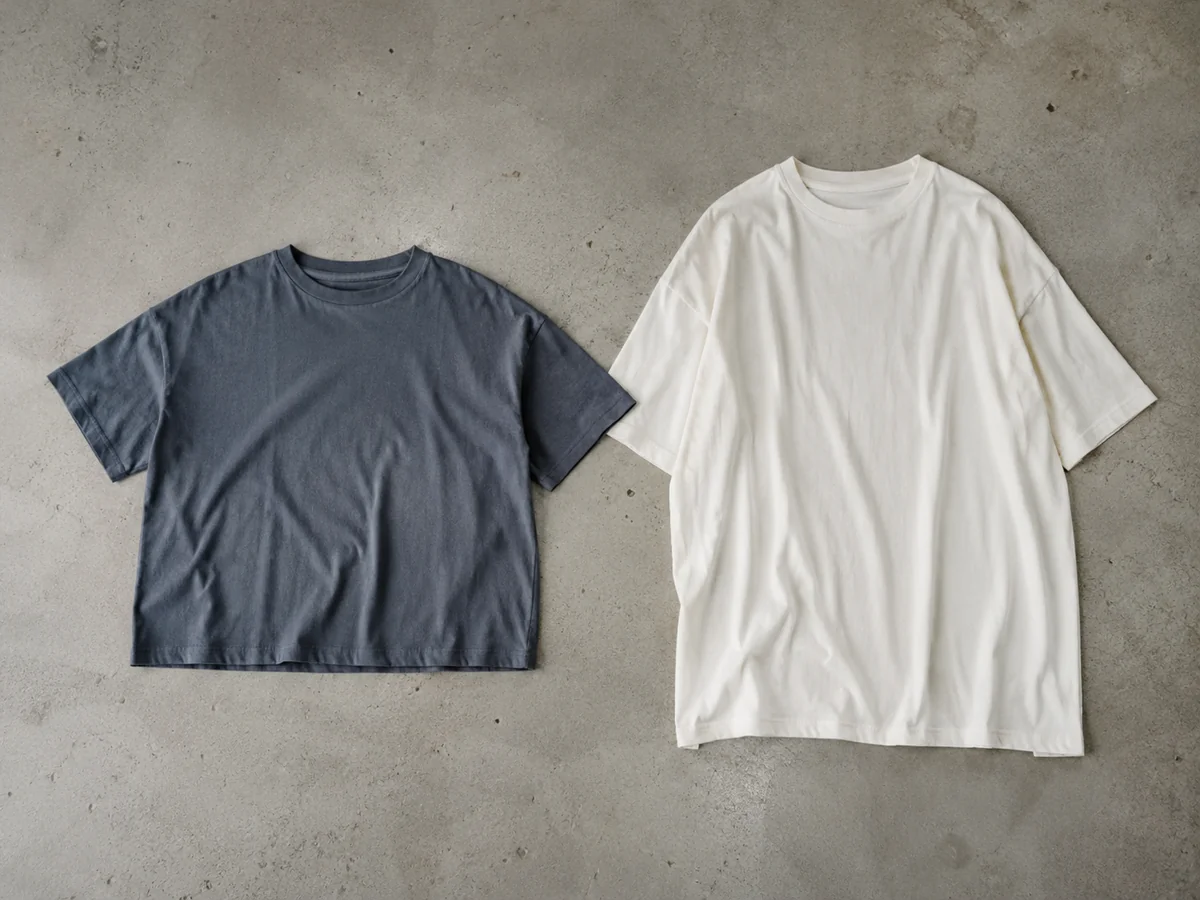
Width is only half the picture
A boxy tee is usually described by the relationship between its width and length: a comparatively broad body with a shorter, squarer outline. Oversized describes an intentionally roomy fit more generally. An oversized tee might also be long, with large sleeves and a generous neckline. The names overlap between brands, so treat them as directions rather than reliable measurements.
The simplest comparison is a flat garment chart. Look at the width and length together, then check the shoulder and sleeve measurements if supplied. A shirt that is several centimetres wider but the same length as your current tee will behave differently from one that increases in every direction.
A larger regular tee is another option
Buying a larger size in a regular cut can provide room, but it may also move the neck opening, hem and sleeves farther than you intended. A pattern designed to be boxy can keep the body short while adding width. That is why the result of sizing up is not always equivalent to choosing a different cut.
Consider a practical example: you want a loose tee under a cropped jacket. A short, wide tee may finish close to the jacket hem. A long oversized tee might create a visible band of fabric underneath, which could be exactly what you want or feel untidy to you. Neither is automatically more flattering; the surrounding clothes determine the effect.
Dropped shoulders add another variable. When the shoulder seam sits down the upper arm, the sleeve can start lower even if its own measured length is modest. Look at where the sleeve opening finishes on a person, rather than reading sleeve length without knowing where the measurement begins.
Try the shape while doing something
Lift your arms, sit down and reach across a table. A short body may expose more of the waistband during movement. A wide body can bunch under a seat belt or coat. You do not need to perform an elaborate fitting routine; a few ordinary positions tell you more than a single straight-on mirror view.
If you plan to tuck the shirt, assess the amount of fabric inside the waistband. If you plan to leave it loose, check the hem from the side and back as well as the front. Stiff jersey holds width differently from a fluid knit, even at the same dimensions.
Keep a note of the proportions you like rather than committing to one label. A useful note might be broad through the chest, no extra body length, sleeves near the elbow. That description gives you something concrete to compare across brands whose ideas of oversized and boxy differ.
Further information