A slim cardholder still needs easy access
A slim profile is useful only if the cards you need are easy to remove and stay put afterwards.
Try the card you use most
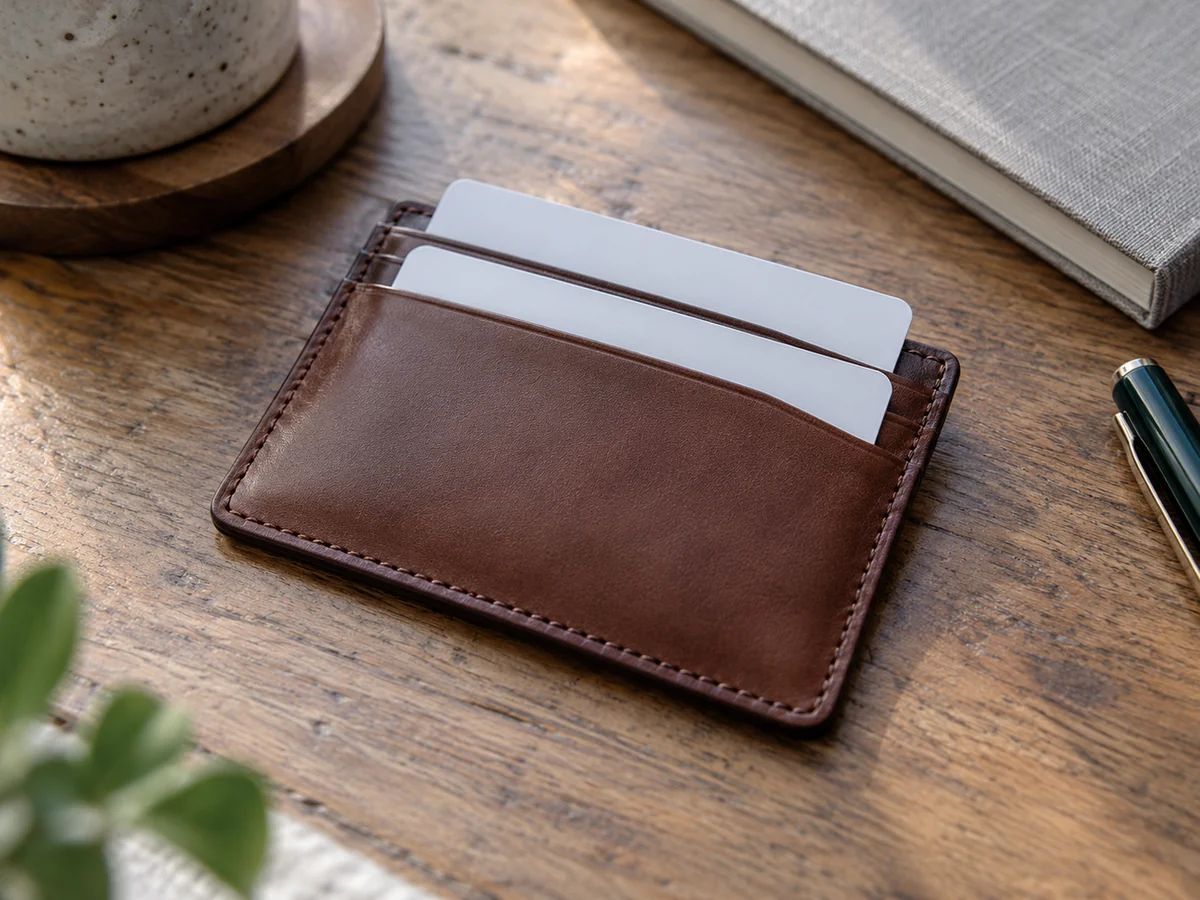
The first card you reach for tells you a great deal about a cardholder. Put it in the proposed everyday slot and try removing it with the same hand you normally use at a checkout or door. A small thumb cut-out, exposed edge or pull tab can make access easier, but the mechanism needs to work with the actual thickness and surface of your card.
Do not judge only by an empty holder. A pocket may feel accessible with one card and become tight with several; another design may depend on a full stack to hold things firmly. Check the manufacturer's stated capacity and intended arrangement. Forcing extra cards into a slot can distort the material, while carrying fewer than expected may reveal that the design does not retain them as you hoped.
Separate frequent and occasional use
A front slot can suit a daily payment card, with backup cards stored more deeply. If you regularly need three different access cards, however, one quick slot may not solve the problem. Think through a normal day rather than choosing by the largest advertised number. The relevant question is how many cards you can identify and remove without first handling the others.
For shared stack compartments, check whether a pull tab lifts the cards far enough to distinguish them. Avoid pulling hard if something catches, and follow the maker's arrangement. A mechanical ejector has different requirements from a soft sleeve. Read which card types it accepts and whether thick, embossed or unusually shaped cards affect its operation before relying on it for every essential item.
Keep information and handling in mind
An exposed slot can leave part of a card visible. Decide whether that suits the information printed there and the places you use the holder. A transparent window is convenient for some IDs, but it should not become a reason to display personal details unnecessarily. Likewise, an RFID-related claim addresses a particular feature; it does not prevent physical loss or someone seeing your card.
Try the loaded holder in its usual pocket. Can you take it out without bringing loose receipts with it? Does an edge catch on the fabric? A slim shape can be comfortable, but an overly tight trouser pocket may make retrieval difficult. If you carry cash, decide where it belongs rather than wedging folded notes behind cards that were meant to slide smoothly.
Inspect the slots periodically for stretching, loose seams and debris. Do not rely on a vigorous upside-down shake as a general product test; use the maker's guidance and check normal handling over a safe surface. A good cardholder feels straightforward at the moment you need it, then holds its contents as intended once they are put back. Thinness is one benefit within that larger task.
Further information