Pick a coaster for the surface underneath
A coaster has two surfaces to consider: the one under the drink and the one resting on the furniture.
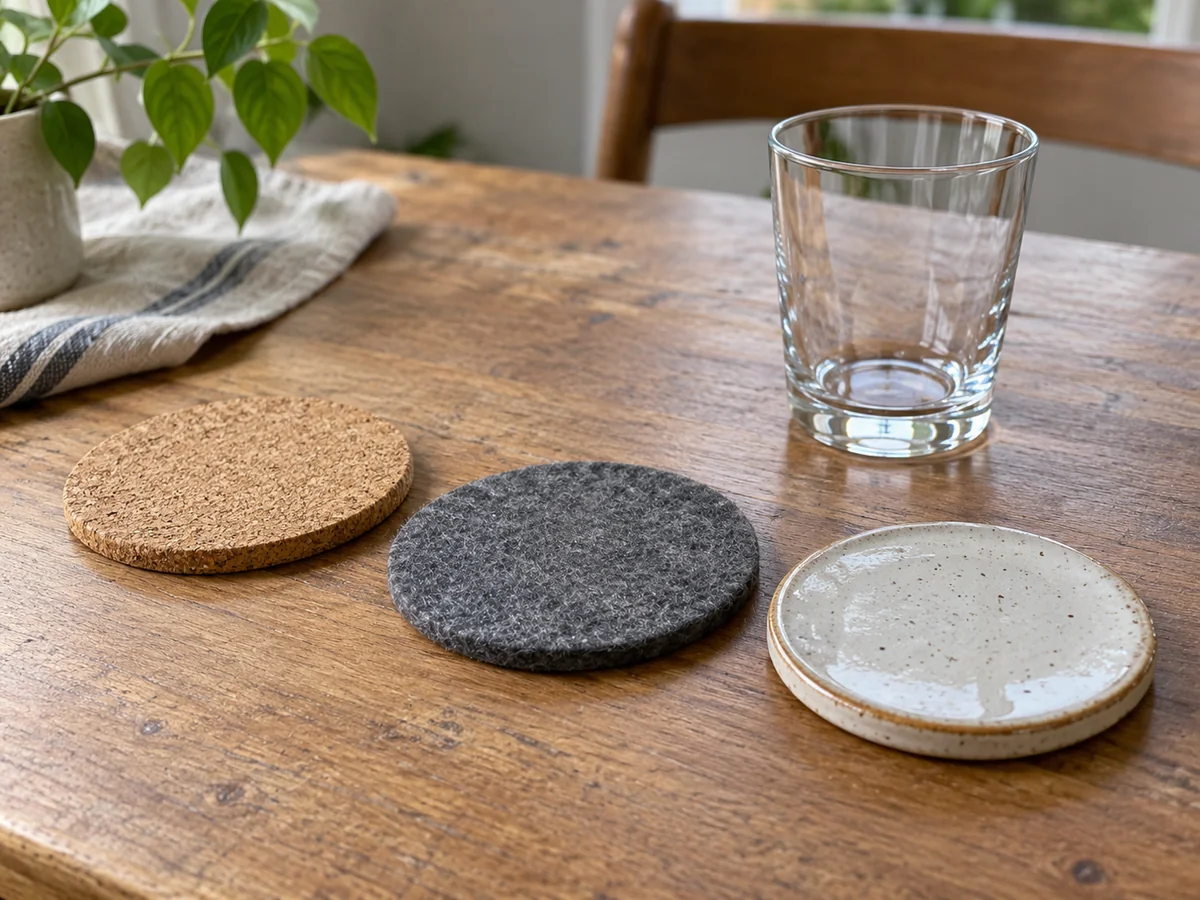
Start with the table
The right coaster for a desk can be different from the right one for a dining table. A hard stone disc may look reassuringly solid but needs a suitable underside so it does not scratch a delicate finish. Cork, felt or another soft backing can help separate hard surfaces, provided it is clean and securely attached. Dust and grit underneath can still cause marks if a coaster slides around.
Measure the base of the cups you use. A small coaster that disappears beneath a broad mug leaves little room for a stray drip. An unusually deep raised edge may interfere with a wide base and make the cup less stable. Try the combination with an empty cup on a level surface before using it for a hot drink. Decoration should not make the cup balance on a ridge.
Absorbing water and catching it are different
Cold drinks can leave condensation around the base. An absorbent coaster takes up some of that moisture; a non-absorbent one may collect it on top. Neither approach removes the need to check underneath and let the coaster dry. If a material becomes saturated, it may stop protecting the furniture as you expect. Do not leave a damp coaster in one place for days on a sensitive wooden surface.
Glazed ceramic, cork, silicone and felt each behave differently, and the precise construction matters as much as the broad material name. A cork-backed ceramic coaster is not the same thing as a single cork disc. Check whether the item has a coating, a glued backing or a printed layer, since those details can change the washing instructions. Dishwasher suitability should be stated for the complete coaster, not inferred from one component.
Choose a cleaning routine that fits
For a desk used every day, easy wiping and thorough drying may matter more than a dramatic finish. For occasional guests, a stack that stays flat and separates easily can be more useful than a bulky holder. Look for a surface that does not catch the cup as you lift it; a wet coaster stuck underneath can fall onto the table or floor unexpectedly.
Keep coasters where drinks actually land. A perfect set inside a distant cupboard does little for the glass beside a laptop. If you regularly carry a drink between rooms, leave a suitable coaster in each place rather than relying on memory. The material choice becomes much clearer when you consider the cup, the furniture and the moisture together. There is no need to treat a small household object as complicated, but these few checks can prevent an irritating mismatch.
Further information