Reading cotton jersey beyond the label
Cotton identifies the fibre; jersey describes the knitted structure. Both matter when you assess a shirt.
Two words, two kinds of information
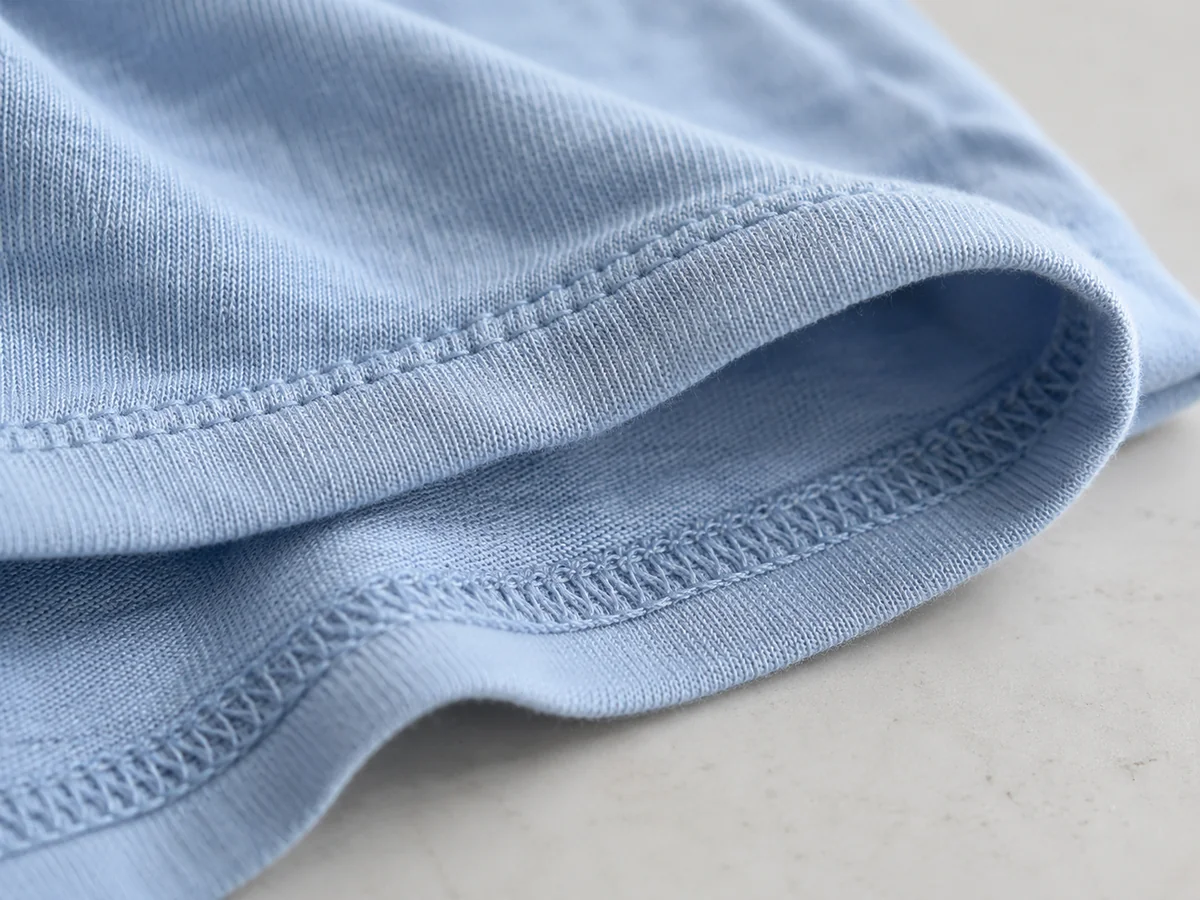
Cotton jersey is not a particular quality grade. Cotton tells you what the fibre is, while jersey tells you something about how yarn has been knitted into fabric. That distinction helps explain why two cotton shirts can feel unlike each other even when the labels seem almost identical. Their yarn thickness, knit density, finishing and weight may differ.
On ordinary single jersey, the face and reverse have different appearances. Look closely at a plain tee: one side has small columns of knit stitches and the other looks more looped. A garment maker can choose which surface to show, so do not identify the intended outside solely by guessing from the texture.
Give the fabric room to show its character
Hold a section loosely rather than pulling it tight between both hands. Does it fall in soft folds or keep a firmer shape? Place it over your forearm and compare the feel against your skin. A very smooth finish in a shop is pleasant, but it should be considered alongside thickness, coverage and the care instructions.
Next, make a modest sideways stretch and release it. You are looking at ordinary movement, not testing the breaking point. Observe whether the fabric returns neatly or remains rippled. Cotton jersey can stretch because it is knitted; this does not mean it necessarily contains elastane. Check the composition instead of trying to infer the blend from stretch alone.
Use light to assess coverage. A pale shirt may look opaque when folded into several layers and much more transparent as a single layer. Pay particular attention to the chest or shoulders if the cut will place the fabric under tension. Dark fabric is not automatically the better choice, but it can hide contrasts that white jersey reveals.
Read the whole garment
Inspect the seams while the shirt lies flat. If the side seam appears to travel round the body, first straighten the garment gently and check again. A product photograph can obscure this detail, especially on a model posed at an angle. Ask for a flat front and back view when alignment matters to you.
Compare the measurements with a tee that has already survived your normal laundry routine. A new cotton knit can change dimensions during washing, and a preshrunk claim is not a promise of zero change. Read any stated tolerance rather than mentally treating every measurement as exact.
Jersey is a useful everyday fabric because its structure permits a comfortable range of movement. Whether a particular version suits you depends on how it hangs, how much coverage it offers and how it behaves within a finished shirt. The label starts the assessment; it cannot replace those checks.
Further information