When a cotton blend suits the job
A blend can be useful, but the percentages and the finished construction matter more than the word alone.
Read the actual percentages
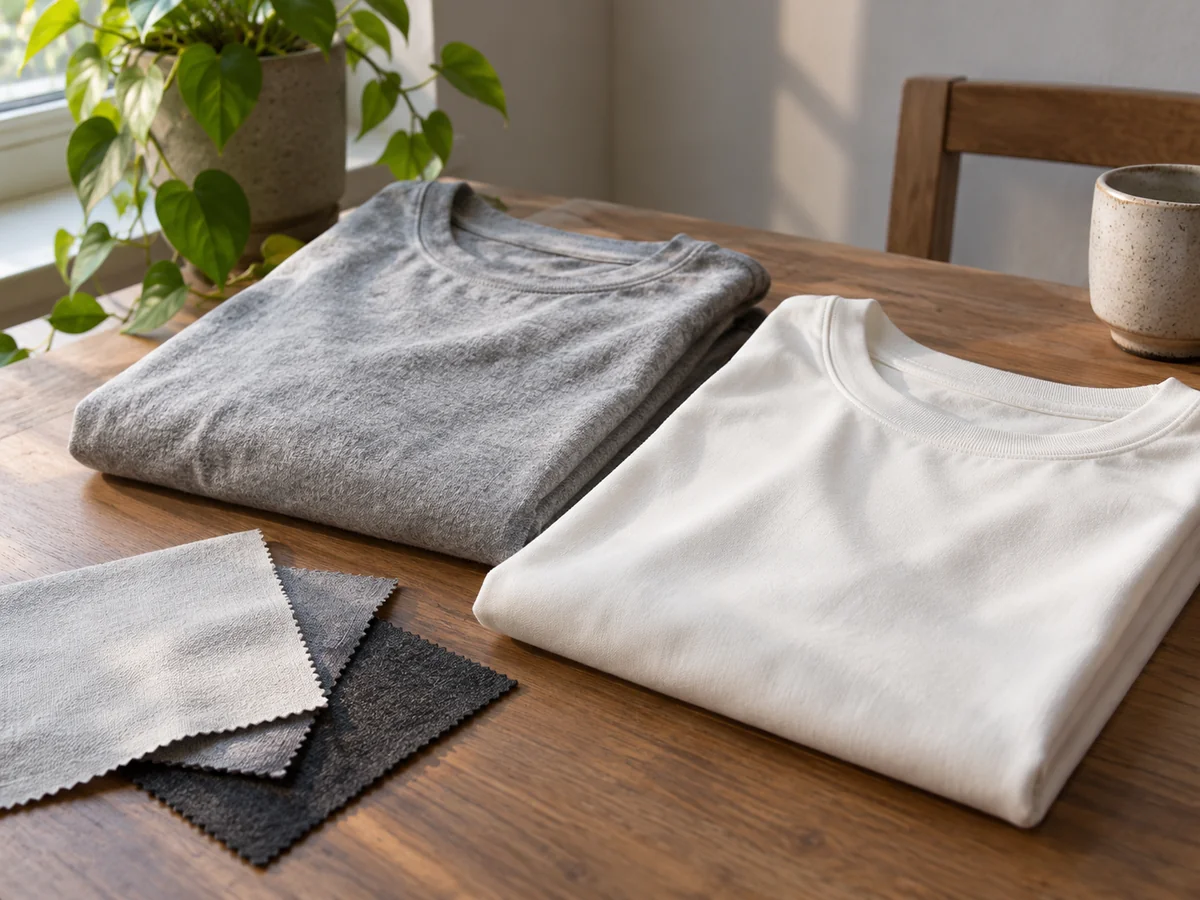
Cotton blend covers a wide range of fabrics. A shirt containing mostly cotton with a little polyester is not the same proposition as one containing mostly polyester. A third fibre can change the description again. Start with the composition of the selected colour, rather than assuming the large heading on a product page applies identically to every option.
Blends are used to balance different characteristics, but the finished fabric still needs to be judged. Weight, yarn, knitting and finishing affect how a tee hangs and feels. A percentage list cannot reliably tell you whether the collar will be comfortable or whether the body provides enough room.
Match it to an ordinary day
Think about the job before looking for a universally best fibre. For a tee worn beneath an overshirt, you might care most about a smooth surface and manageable sleeve bulk. For travel, you might prioritise a care routine you can follow away from home. For a large chest graphic, the feel of the printed area may matter as much as the base fabric.
Do not automatically treat an everyday cotton-poly tee as sportswear. The presence of polyester does not establish that the garment has been designed or tested for moisture management. If a specific performance feature matters, look for that feature in the product information rather than inferring it from the fibre name.
Heather colours can make a useful visual difference. Their mixed appearance may feel quieter than a flat solid shade, especially beside a bold print. However, heather is an appearance, not a complete composition. Check the label instead of assuming every grey marl contains the same fibres or behaves in the same way.
Ask about the whole care routine
Read the washing and drying instructions before deciding that a blend will be convenient. The decoration can impose limits beyond those of the fabric. A garment that allows a particular wash temperature may still prohibit direct ironing over the artwork. Convenience comes from being able to follow the complete instructions, not from recognising one synthetic fibre in the list.
If buying online, compare the chart with a similar washed garment. Do not choose a smaller size on the assumption that polyester guarantees there will be no dimensional change. Construction and finishing remain relevant, and brands use different tolerances.
Keep the decision specific. A blend suits the job when you like its feel, its cut and its care requirements in the circumstances where you will wear it. It does not need to defeat every all-cotton alternative. Treat composition as information that helps you select a useful shirt, not as a shortcut to a permanent ranking of materials.
Further information