Crossbody strap width and comfort
Width affects how a strap meets your shoulder, but edges, adjusters and load still decide comfort.
Start with the contact area
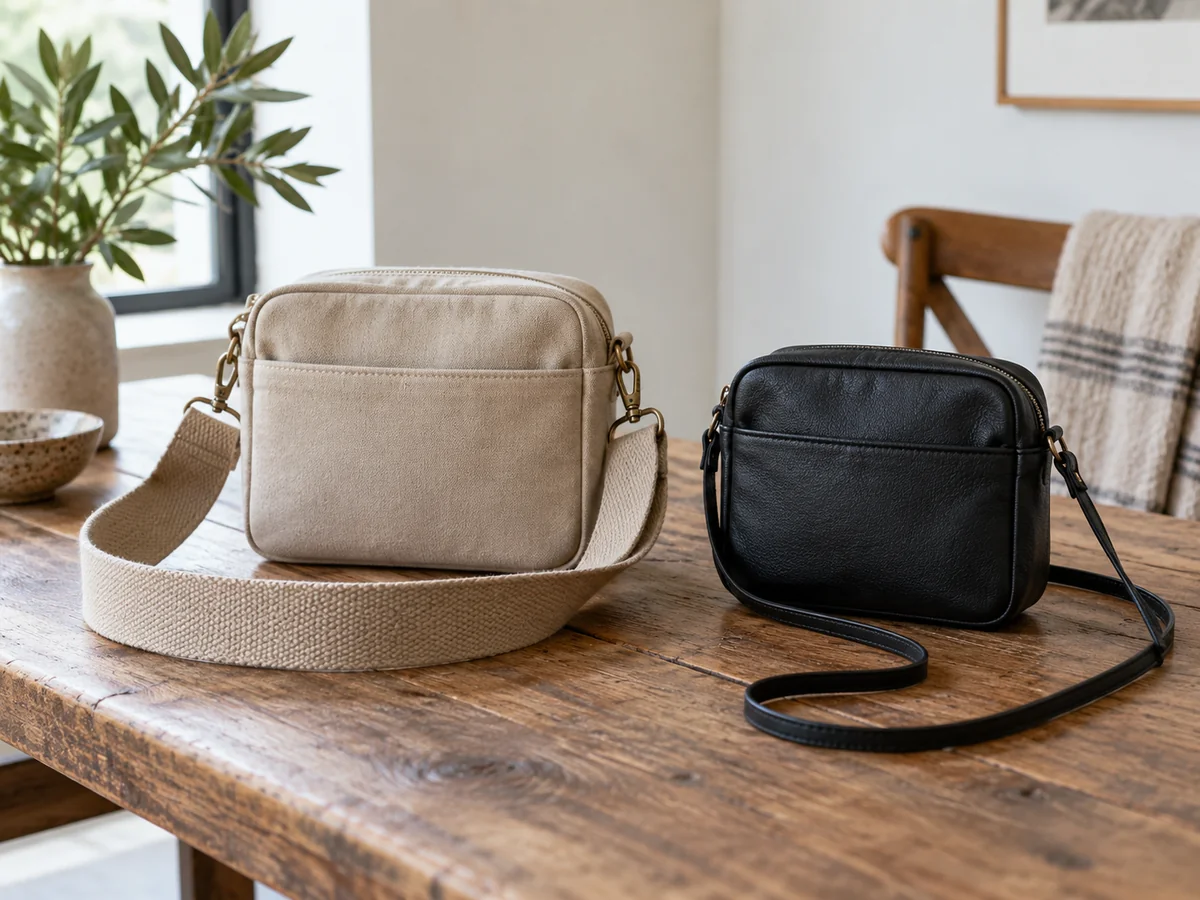
A narrow crossbody strap can be unobtrusive with a small, light pouch. Add a bottle, wallet and power bank, and the same strap may feel less pleasant. A wider strap spreads contact across more of the shoulder when it lies flat, but width alone does not promise comfort. Stiff edges, twisted webbing and poorly placed hardware can make a broad strap feel surprisingly awkward.
Look at the whole length that will touch your body. A decorative padded section may be useful only if it sits at your shoulder at the chosen adjustment. If it slides towards the bag, the thin underlying strap still takes the pressure. Likewise, thick seams near a buckle can create a noticeable edge beneath a light shirt. Product close-ups are more helpful here than a distant outfit photograph.
Try the normal load
Put your usual contents inside before judging the strap. Walk, bend to pick something up and sit down. The bag should not pull the strap into a narrow fold or make you keep repositioning it. If the adjuster rests directly on a sensitive spot, see whether the strap can be reversed or altered according to its design. Do not improvise a connection that was not intended by the maker.
Clothing changes the feel. A strap may grip a cotton sweatshirt and slide across a smooth raincoat. Wide webbing can rub against a collar, while a thin leather strap may feel firmer than expected. Test over your normal outer layer if possible. Comfort on a bare shoulder in a fitting room may not describe a winter commute or a long walk in warm weather.
Check the connections too
A replacement strap must suit both the bag's attachment points and the intended load. Examine hook size, ring clearance and whether the hardware can rotate without scraping the fabric. A wide strap attached through weak or incompatible fittings does not improve the bag. Ask the manufacturer about approved replacements rather than assuming all detachable straps are interchangeable.
Consider the weight inside the bag before trying to solve every problem with padding. Removing items you seldom use may make a bigger difference than a thicker shoulder section. A very small crossbody overloaded with dense objects can bulge, swing and pull at its attachments regardless of strap width. The right carrying arrangement starts with a plausible amount of stuff.
When comparing options, note width beside adjustability, edge finish and empty bag weight. Choose a strap that lies naturally along the route it takes across your body and keeps its setting as you move. If carrying causes persistent discomfort, stop and change the load or carrying method rather than treating a wider strap as a guaranteed fix.
Further information