Choose a gift around one useful detail
A single observed preference gives a gift more direction than a broad personality label.
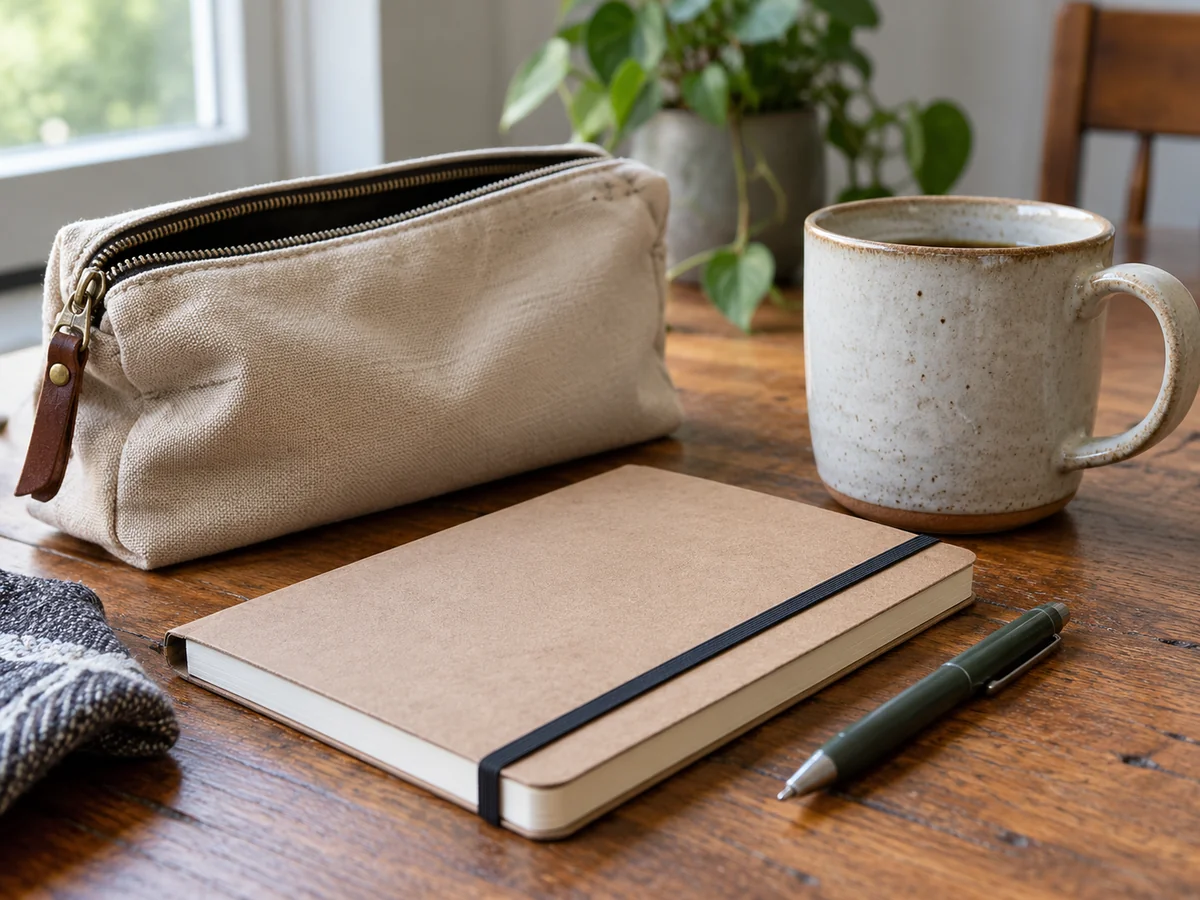
Notice a small, repeatable habit
Someone folds shopping lists into a jacket pocket. Someone else keeps a notebook beside the phone or carries a reusable bag on the evening walk home. These ordinary details can be better gift clues than labels such as “creative” or “outdoorsy.” They point towards a particular use, with practical limits you can understand. Start with something you have actually noticed or been told, rather than inventing a routine for the recipient.
The aim is not to improve their life without being asked. A gift that implies their current belongings are inadequate can feel like an assignment. Instead, look for a pleasant version of something they already choose to use: a pocket-sized notebook with the ruling they prefer, a pouch that fits their usual bag or a mug with room for the way they hold its handle.
Keep the useful detail specific
Suppose the person writes on trains. The relevant question is not simply whether they like stationery. A notebook that opens comfortably, fits their bag and works with their pen may matter more than an elaborate cover. If you do not know those details, ask a casual, direct question or choose an item that does not depend on them. Guessing confidently is not the same as paying attention.
A recipient who uses a tote daily might appreciate a folding spare, but another large canvas bag could duplicate what they already own. Think about the gap between an appealing object and a plausible use. A compact extra bag for groceries has a different job from a structured work tote. One observed habit should guide the choice without becoming a reason to buy an entire matching collection.
Give it room to remain optional
Choose an amount you are comfortable spending without expecting a particular reaction or future use. A useful gift can still be the wrong colour, size or shape. Include a gift receipt when available and keep packaging needed for an exchange. Avoid personalising an uncertain choice merely to make it seem more thoughtful, since that can limit the recipient's options.
The note can make the connection clear in a few words: “For the lists you always have on the go,” or “Thought this might be handy on your walk home.” Only use an observation that belongs to your real relationship. There is no need to explain every practical feature or persuade the person that the gift was the optimal purchase.
One modest object is enough when it has a clear reason. Adding unrelated extras can dilute the idea and create more things to store. Let the recipient decide how, when or whether to use it. The useful detail makes the choice considerate; the freedom around it makes the gift comfortable to receive.
Further information