Where a graphic sits on a shirt
A print has to work on a moving garment, not just a flat mock-up. Look at its position, size and relationship to layers.
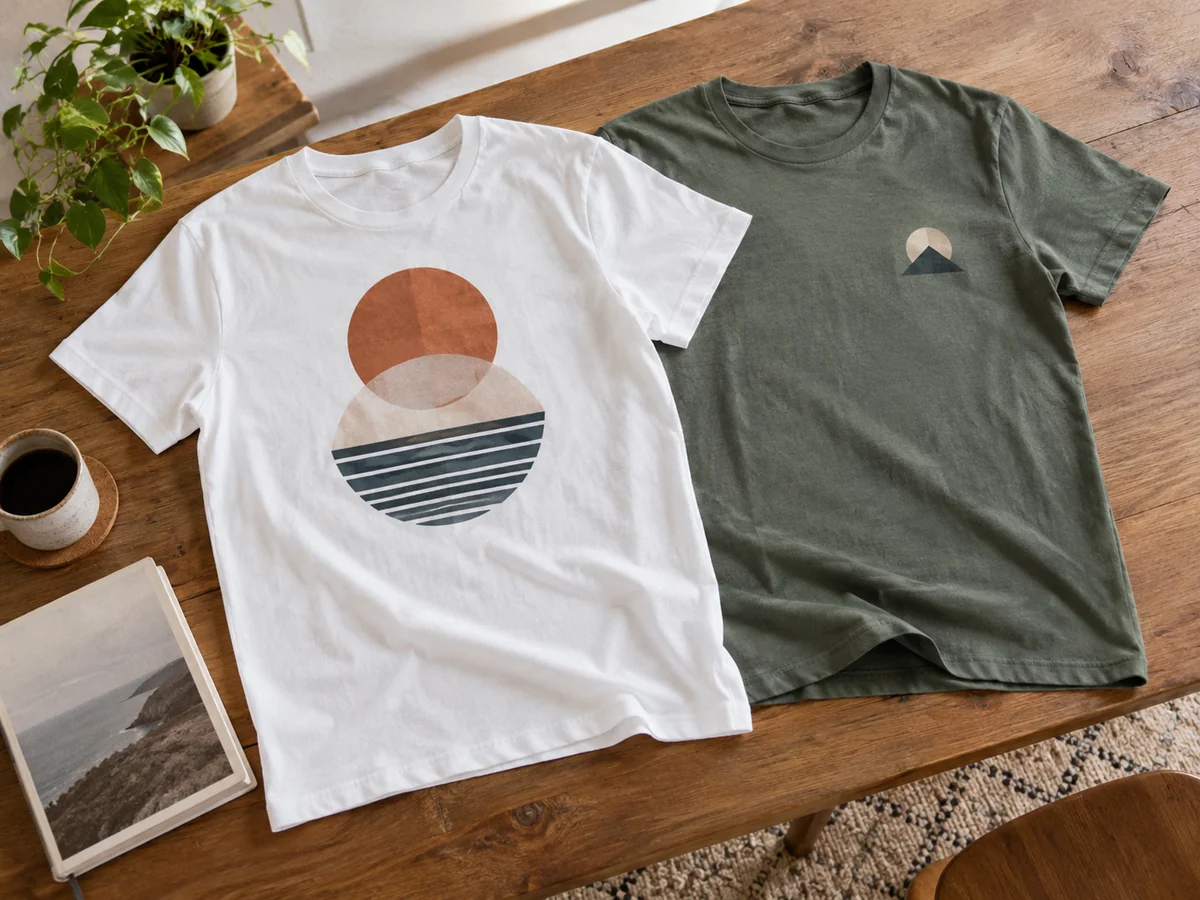
The graphic is part of the fit
Two shirts with the same artwork can feel visually different because the image sits at a different height or scale. A small chest mark creates one emphasis; a broad central design creates another. Start by looking at the shirt as something worn on a body, rather than treating the graphic as a separate picture laid on top.
Check whether the listing shows a finished garment or only a digital mock-up. A mock-up can explain the intended design, but it cannot fully show how fabric folds, stretches or moves around the print. A clear worn photograph is useful when placement is a major reason for buying.
Look with the arms down and the layers open
Inspect the graphic while your arms rest naturally. Artwork placed near the side can partly disappear around the body; a design near the hem can fold above the waistband. If you plan to tuck the shirt, establish how much of the design will remain visible. A print you love may be better suited to an untucked style.
Try your usual open shirt or jacket over the tee. A central image may sit between the front panels, while small left-chest artwork can become covered. Bag straps can cross a design as well. There is no need to avoid those interactions, but it helps to see them before choosing a shirt specifically for its artwork.
For a back print, check the relationship with a hoodie, hair or backpack. The most interesting part of the image may sit exactly where one of those normally rests. A small front detail plus a large back design can be a deliberate choice, but the back is still worth assessing even if the shop mainly shows the front.
Do not assume every size has the same proportions
Ask whether the artwork changes size across the garment range if that matters to you. A single print dimension can occupy much more of a small tee than a large one. Alternatively, different print sizes may be used. Product images of one model cannot reliably explain the result in every garment size.
Look for the actual dimensions of the printed area, not just the maximum area a printer can use. A maximum is a production limit; it does not say how large the chosen artwork will be. If the design includes fine lettering, a close-up helps establish whether the text is intended to be readable or primarily decorative.
Choose a placement that works with the garment's cut and your normal way of dressing. The aim is not to obey a fixed distance from the collar. It is to have the image sit comfortably in the part of the outfit where you expect to see it, without depending on a pose or fold that disappears as soon as you move.
Further information