Zip hoodie or pullover for everyday layers
The opening changes how you adjust a layer, carry things and show the graphic underneath.
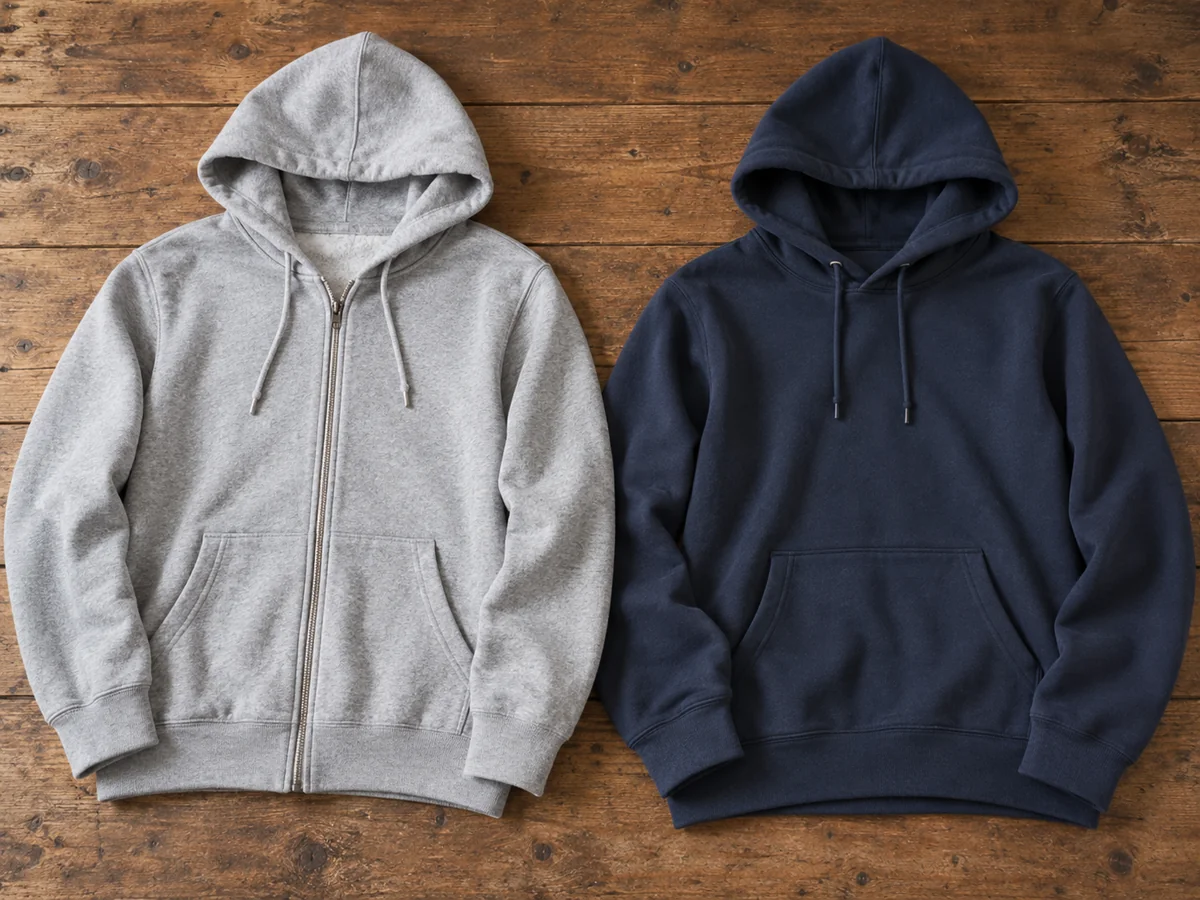
Picture the moment you get too warm
The useful difference between a zip hoodie and a pullover often appears halfway through the day. On a warm train or in a heated room, a zip front lets you open the garment while keeping your arms covered. A pullover generally has to come off if opening the neck is not enough. Think about how often you make that adjustment before comparing colours or artwork.
A zip also makes dressing easier over bulky headphones, glasses or a carefully arranged underlayer. A pullover offers an uninterrupted front and no hardware down the centre. These are everyday trade-offs, not a hierarchy in which one format is the more grown-up choice.
Try the front while seated
Close a zip hoodie and sit down. Notice whether the zip forms an uncomfortable fold at the waist or presses against the neck. Check whether the slider moves smoothly without catching the fabric behind it. Open it again while seated; a feature that is easy to use standing in a shop can be less convenient beneath a coat.
For a pullover, inspect how easily it passes over your head and shoulders. Do not judge only the chest measurement. A close neck and a firm, heavy fabric can make removal awkward even when the body is generous. Try it over the layer you normally wear, since fabric friction changes the experience.
Pocket layout changes with the front opening. A pullover often has one continuous pouch, while a zip divides that space. Put your empty hands into the pockets to check their angle and depth. Do not assume either format keeps a phone secure; open pockets can release small items when you sit or bend.
Think about the clothes and artwork around it
If you want to show a printed tee beneath the hoodie, an open zip gives you that option. A pullover covers the tee and provides a larger uninterrupted surface for its own design. When a graphic crosses a zip, inspect the finished product photograph closely: the gap and hardware become part of how the artwork reads.
Under a coat, compare the combined thickness at the collar and waist. The zip format alone does not determine bulk. Hood size, fabric weight and pocket construction can make a lighter-looking garment feel surprisingly crowded. A slim pullover may layer more easily than a substantial zip version, or the reverse.
Choose the opening that fits your routine, then select the fabric and cut within that format. If you frequently open and close layers, the zip earns its place. If you usually wear the hoodie continuously and prefer the clear front, a pullover may suit you better. The ordinary moments of use make the decision clearer than a flat photograph.
Further information