What a breakaway lanyard is for
A safety release has a specific purpose and should not be confused with the clip that detaches an ID badge.
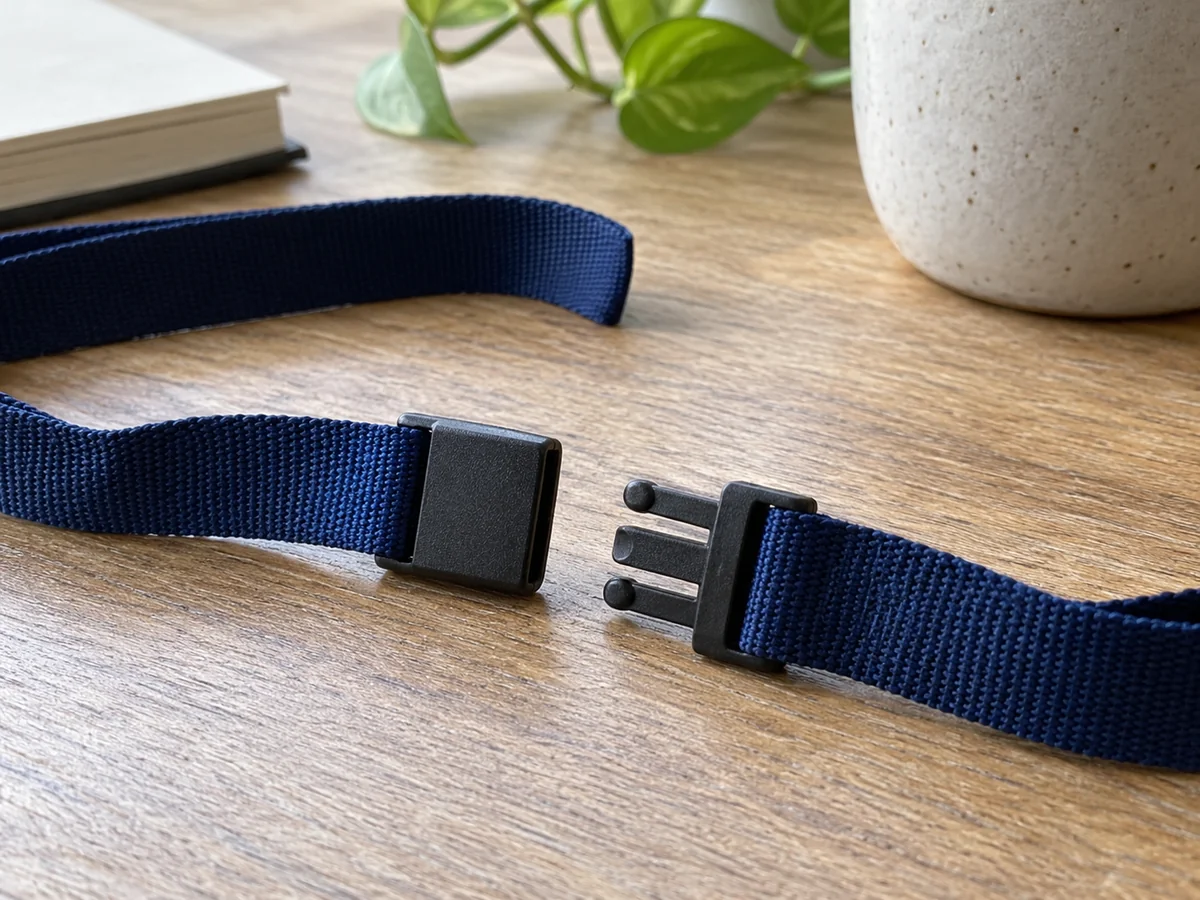
Two closures can do different jobs
A lanyard may have a detachable buckle near the badge and a separate release in the neck loop. The lower buckle can let you hand over an ID without removing the entire lanyard. A breakaway closure is intended to separate when subjected to a sufficiently strong pull, reducing the risk of the loop staying caught. Check which feature a product actually includes; “detachable” does not necessarily mean breakaway.
The release may sit behind the neck or elsewhere on the loop. Look at the maker's description and instructions rather than judging it solely from a photograph. DURABLE, for example, describes a safety closure that opens under a strong pull on a particular textile lanyard. That information applies to that design, not to every plastic join that happens to look similar.
The setting comes first
Workplace, school and venue rules should guide whether a neck lanyard is appropriate. Machinery, moving equipment and activities where straps can catch require a proper assessment by the responsible organisation. A breakaway feature is not permission to ignore those conditions. In some situations, a clip-on holder or another approved way to display an ID may be more suitable than anything worn around the neck.
Do not assume an adult ID accessory is appropriate for a child or for play. Follow the age guidance and the rules of the place where it will be used. Avoid improvising a lanyard from cord, tying its release closed or adding a second strap that bypasses the mechanism. Changes can defeat the very function you intended to buy.
Check the everyday details
Read how the breakaway should be reconnected after separation and inspect it for damage. Do not repeatedly subject it to improvised force tests or expect a particular release load unless the manufacturer supplies and supports that specification. If it no longer joins securely or operates as described, replace it according to the maker's advice. A visibly cracked closure should not be treated as a harmless cosmetic problem.
Consider the attached weight as well. A badge and holder are different from a heavy bunch of keys, phone or collection of accessories. Use the lanyard within its stated purpose and keep attachments simple. A wide metal hook must also fit the badge holder properly; an awkward connection can twist the holder or make it uncomfortable against clothing.
A useful ID setup balances visibility, access and the conditions of use. The badge should be readable without needing to swing freely at an inconvenient length, and the fabric should feel comfortable for the time worn. Choose the release feature deliberately, understand its limits and follow the relevant setting's instructions. It is one part of an appropriate arrangement, rather than a universal guarantee against snagging.
Further information