Choose a long sleeve for layering
A layering shirt needs comfortable sleeves and a workable neckline as well as the right body width.
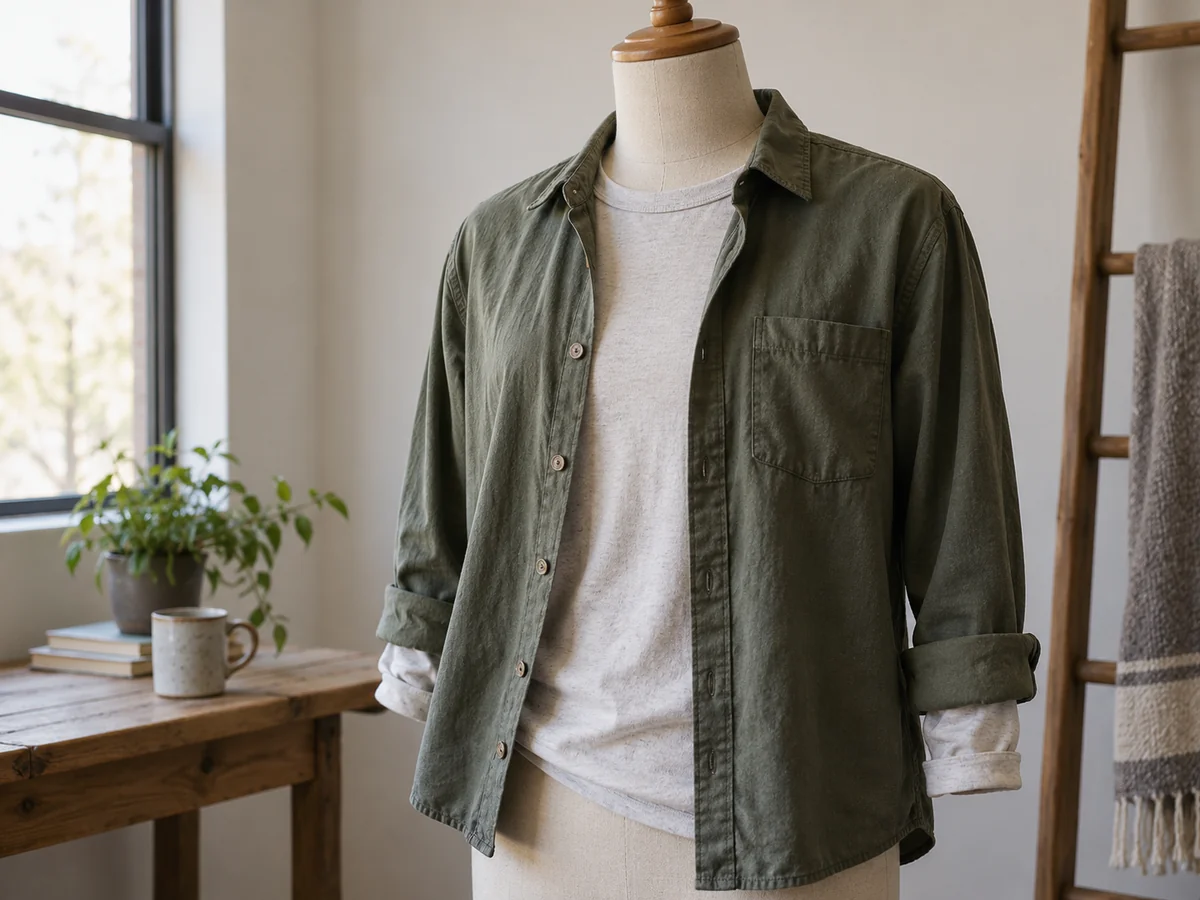
Start with the outer garment
A long-sleeved tee bought mainly for layering should be tried beneath the layer it will accompany. An open overshirt leaves more room than a close cardigan; a jacket with narrow sleeves changes the decision again. A shirt that feels comfortably loose on its own can become difficult once two sets of sleeves occupy the same space.
Pay attention to fabric at the upper arm and underarm. Extra body width may be welcome, but extra sleeve bulk can bunch when you bend your elbow. If that is the problem, look for a different sleeve shape or lighter construction rather than automatically reducing the whole size.
Choose the parts that remain visible
Decide whether you want the neckline, cuffs or hem to show. A crew neck can create a deliberate band beneath a wider opening, while a lower neck may stay hidden. Put the two garments together before choosing from a photograph. Slightly different whites or blacks can be appealing, but they can also look unintended when only a narrow strip is visible.
Check sleeve length with the outer layer on. The tee cuff may slide back, sit neatly at the wrist or extend beyond the jacket. If you prefer a visible cuff, make sure it stays there during ordinary movement without constant adjustment. A sleeve that is long only because the shoulder seam drops lower can gather differently from a conventional sleeve.
Consider the hem while seated and standing. If both layers are tucked, there may be more fabric inside the waistband than you want. If the tee is loose, it may show beneath a shorter outer garment. Neither arrangement is wrong; it should be a deliberate and comfortable choice.
Think about contact and care
The inner shirt spends much of the day against the skin, so feel the neck seam, sleeve seams and label area. A soft fabric description does not guarantee those contact points are comfortable. If a large graphic sits on the front, consider whether the outer garment rubs or catches against its surface.
Check whether the two pieces need different laundry routines. You do not have to wash them together, but it helps to know if one prohibits tumble drying or needs especially careful treatment around the print. A layering piece used frequently should fit a care routine you can actually maintain.
When buying remotely, compare measurements with an existing long sleeve worn beneath the same outer layer. Keep the diagram's sleeve starting point consistent. A successful layering shirt is not necessarily the thinnest or tightest available. It is the one that gives you enough movement and coverage without creating folds you have to rearrange throughout the day.
Further information