Choose a notebook that opens comfortably
A notebook should open in a way that suits your hand and the space where you write. Cover appearance cannot tell you how the binding will behave.
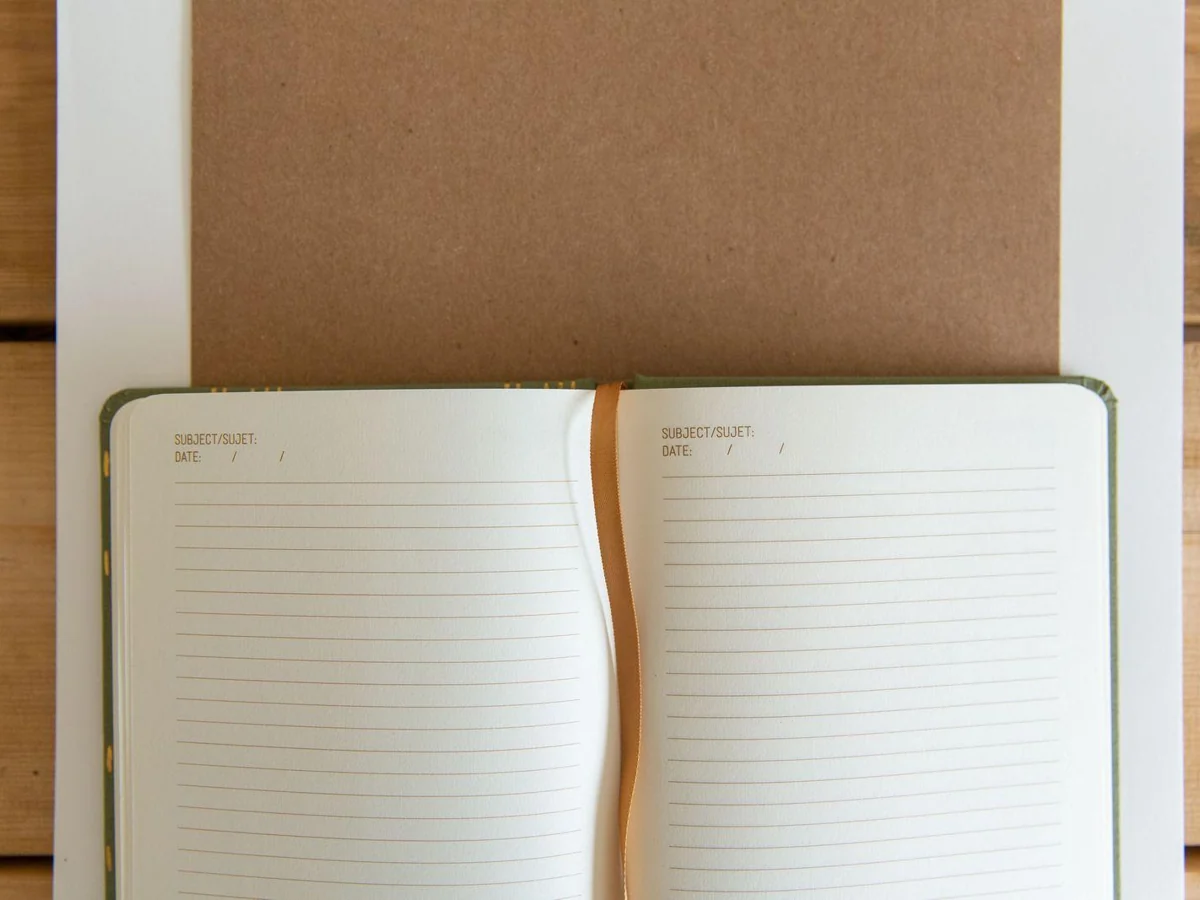
Try the middle as well as the first page
A notebook can feel different near the front, in the middle and close to the back. Open a display sample in several places, without forcing its spine. Notice whether the page stays accessible and whether you need a hand to hold it down. A binding described as lay-flat may still feel different from one brand or construction to another. Your normal writing position is the useful test.
For a compact desk or a crowded train table, the ability to fold a notebook back may matter. Spiral and wire-bound books often permit that, but the wire can get in the way of a hand or catch on things in a bag. Check how the coils are finished and whether the cover protects them. A neat spine in a product photograph does not show how much space the open book takes.
Consider how the pages are held
Thread-bound, glued, stapled and wire-bound constructions attach pages in different ways. Those labels tell you something about the structure, but they do not establish a universal order of durability. The paper, workmanship, page count and intended use all contribute. A thin stapled notebook can be a practical pocket companion, while a substantial bound book may be better for notes you want to keep together for years.
If you expect to remove pages, choose a product intended for that. Perforation and a removable-page system are different from tearing a sheet out of an ordinary bound notebook. Removing pages can weaken a structure or leave ragged edges that make the rest awkward to use. For lists you hand to someone else, a separate notepad may be simpler than asking a journal to do two incompatible jobs.
Match the whole notebook to the routine
A hardcover gives some support when writing without a table, though its weight and stiffness may be unnecessary for a notebook that stays on a desk. A soft cover can travel comfortably but may need protection from sharp objects and wet conditions. Look at the closed thickness too. A large page count can make a book bulky even when the page size seems modest.
Left-handed writers may particularly notice a coil or a raised spine, but preferences vary from person to person. Try writing a few words if a shop provides a test sample, using the position you normally adopt. You are looking for a binding that stays out of the way, not a fashionable construction name. When the pages open comfortably and the book survives the way you carry it, the cover can become the enjoyable final choice rather than the only choice you considered.