Keep paper away from damp corners
A notebook is often stored near a desk or wall. Keep those convenient places dry, clean and free from pressure on the binding.
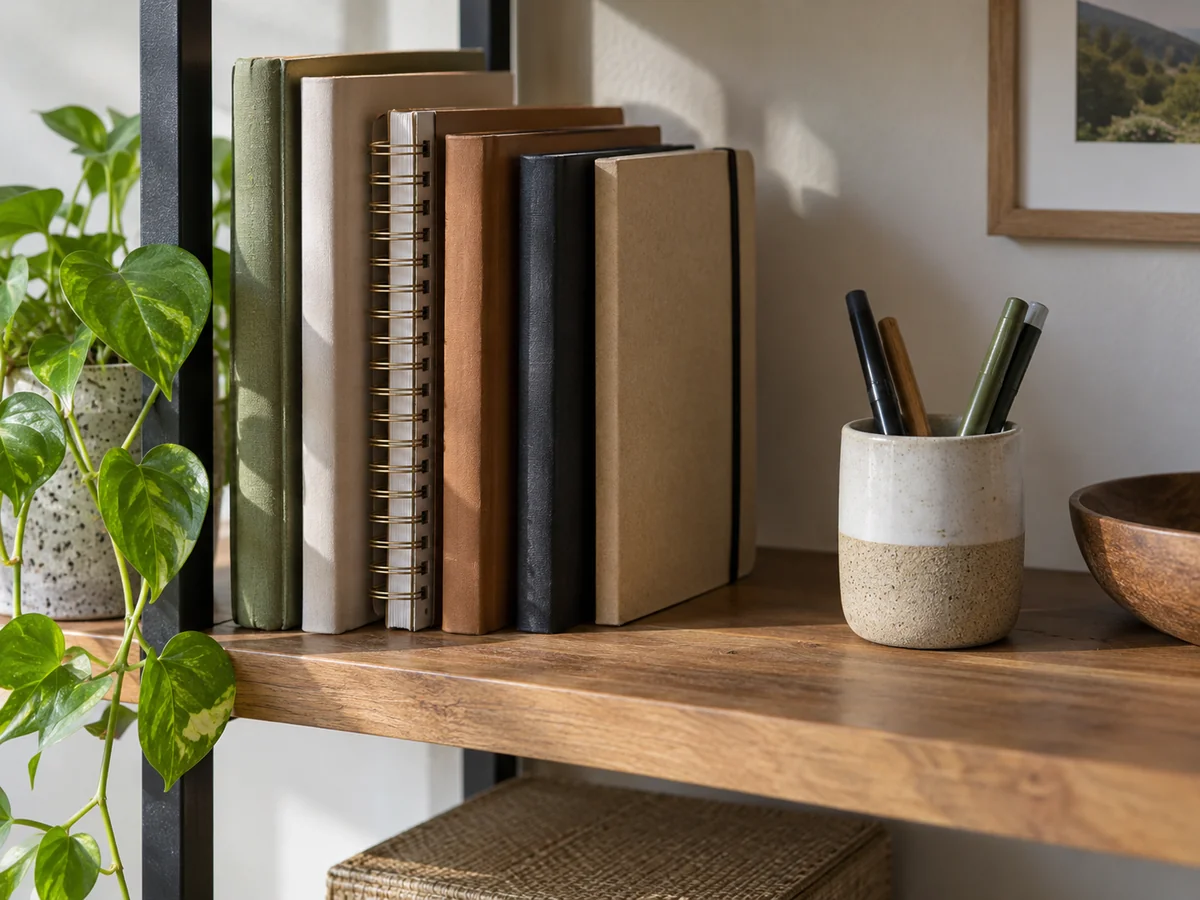
Look at the location before buying a box
A notebook left on a windowsill may be convenient, but that spot can receive direct sun, condensation or a leak. A stack on the floor is vulnerable to cleaning water and unnoticed damp. Before choosing a special storage product, move the paper to a stable indoor place you can inspect easily.
Keep drinks and plants at a sensible distance. A waterproof-looking cover does not seal the exposed page edges or binding. A coaster protects the desk beneath a mug; it does not protect a notebook when the mug is knocked over.
Support the binding
Store a notebook in a position that does not twist or squash it. Upright books need enough support not to lean heavily into an empty space. A large or awkwardly shaped notebook may be easier to keep flat in a modest stack. Avoid making the bottom volume carry a towering pile.
Do not force the notebook into a shelf gap that bends its cover or catches the page corners. Remove it by supporting the volume rather than pulling hard at the top of the spine. These habits matter especially when the binding is already flexible or the notebook contains extra inserted pages.
Let ordinary use finish before storage
Allow ink, paint or glued additions to dry as their materials require before closing the notebook. A page that feels almost dry can transfer marks to the facing sheet. Avoid pressing a newly decorated spread shut beneath heavy books simply to flatten it.
Remove temporary objects that could distort or mark the pages, such as bulky clips, wet leaves or food wrappers. Keep loose documents in a suitable separate folder if they make the notebook bulge. A binding designed for its original page count may not comfortably accommodate a large collection of additions. Label the separate folder clearly so removing the papers does not make their connection with the notebook harder to remember.
Respond to damp rather than hiding it
If a notebook feels damp or develops an unusual smell, investigate the location. Do not seal it immediately in a plastic box and assume the problem is contained. Move undamaged neighbouring books away from the source and address the leak or condensation. For mould or valuable personal papers, seek suitable professional guidance before handling or treatment.
Photograph or digitise important notes when practical, keeping a separate backup in an appropriate place. A digital copy does not preserve the physical object, but it can protect the information from an accident. For the notebook itself, a dry, supported and accessible storage position is often the most useful improvement you can make.