Sew-on and iron-on patches have different limits
Heat, stitching and removable fastenings suit different fabrics. Check both the patch and the item before choosing an attachment method.
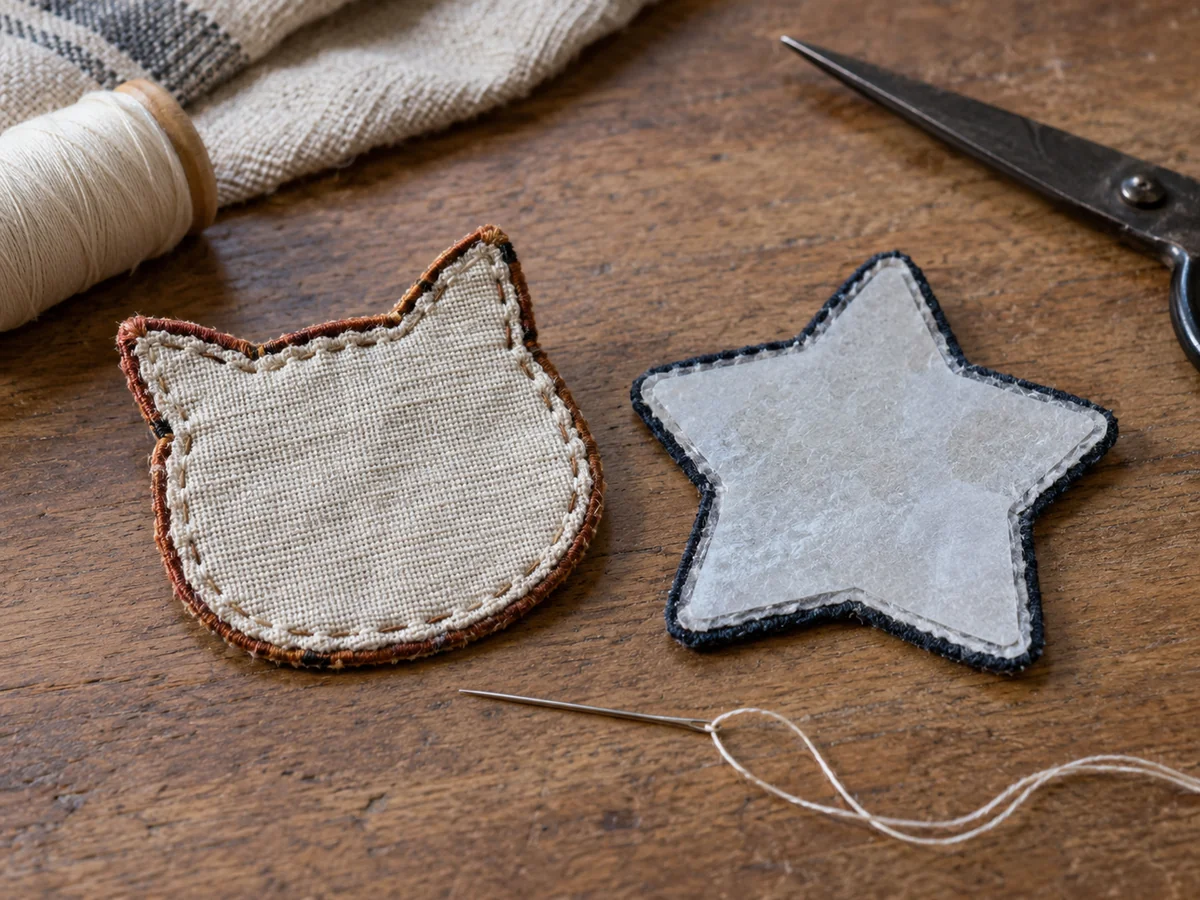
Read the backing before the design
Two patches with the same illustrated front can have quite different backs. One may be supplied for sewing, another with heat-activated adhesive, and another as part of a hook-and-loop system. Look at the product description and instructions before deciding how to attach it. A patch called iron-on is not permission to press it onto every material with a hot iron.
The item underneath needs its own check. Some synthetic fabrics, coated bags and delicate finishes cannot tolerate the heat required for a particular adhesive. A padded or structured area may also be difficult to press evenly. Follow the care label and ask the manufacturer if compatibility is unclear. Do not experiment on a valuable garment while hoping a protective cloth will make an unsuitable temperature harmless.
Sewing creates a different commitment
A sew-on patch does not require heat, but stitches make holes and the work needs access to the back of the fabric. Check that you will not accidentally sew through a pocket you want to keep using or catch a lining in the wrong place. Lay the patch down and inspect the garment from both sides before beginning. A placement that looks centred when flat can sit differently when the item is worn.
Choose thread, needle and stitch technique suited to the fabric and patch. A stiff, dense patch on very light material may pull or distort it even when attached neatly. If you do not sew regularly, a repair professional can help assess a suitable position and method. Attaching a patch securely is more useful than copying decorative stitches that do not fit the job.
Follow the complete care requirements
For an iron-on product, the supplier may specify temperature, pressure, time, cooling and a delay before washing. Those details vary; do not combine the hottest setting from one tutorial with the longest time from another. The garment must tolerate the whole process. Some makers recommend additional stitching for durability, but that is a product-specific instruction rather than a cure for every incompatible backing.
After attachment, check that the patch lies as intended and no edge catches during normal movement. Follow the most restrictive applicable care instructions for the combined item. Remove a patch only with an appropriate method; adhesive and needle holes may leave evidence behind. If you want to change designs frequently, a compatible removable system may suit you better than repeated ironing and peeling. Choosing the attachment thoughtfully lets the patch become part of the item instead of a repair problem waiting at its edge.