Keep pins clean without wearing away the finish
A small metal pin may carry plating, colour and printed detail. Gentle handling helps preserve all of them.
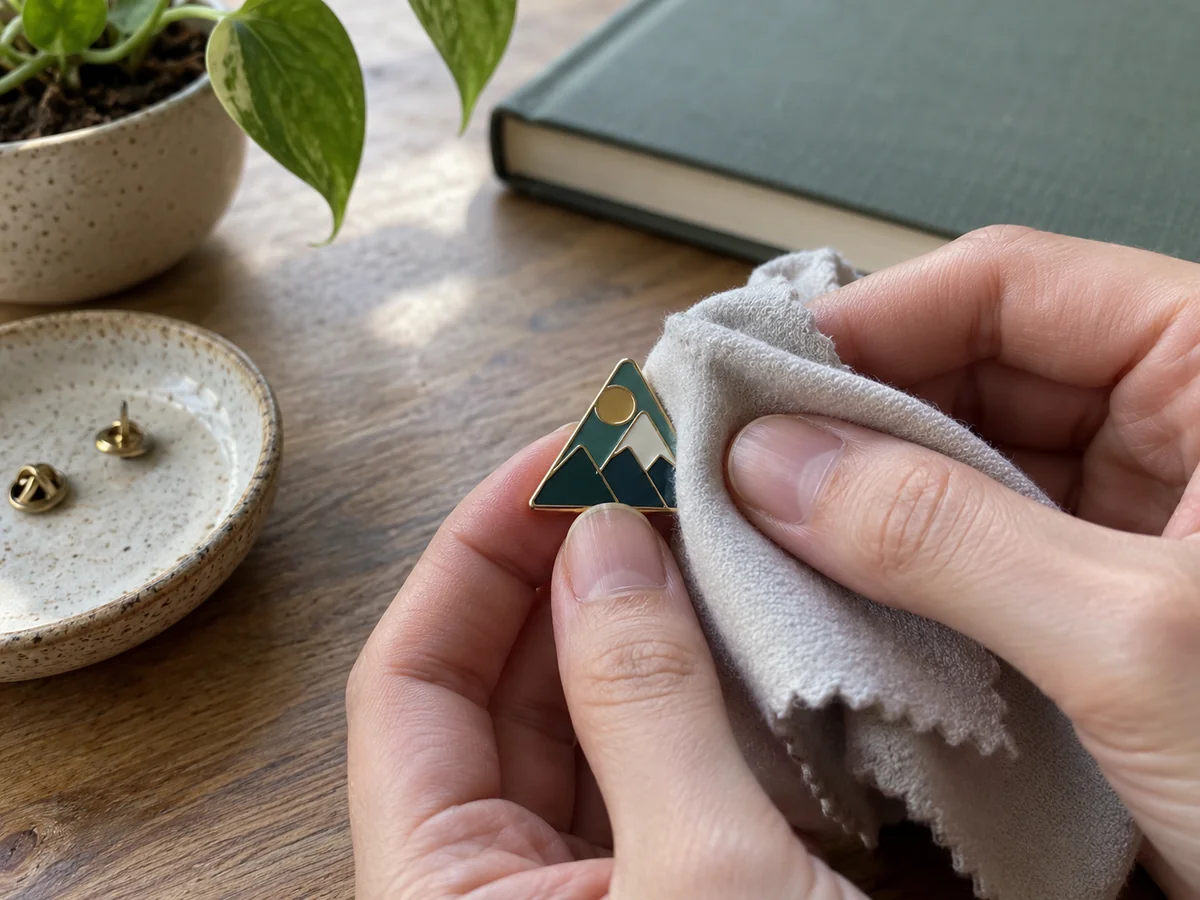
Treat the face as a finished surface
A decorative pin can contain several materials in a very small object: a metal base, a plated finish, coloured areas, printed detail and a rear fitting. A cleaning method suitable for bare metal may be unsuitable for the finished face. Start with the maker's instructions and avoid identifying the entire object simply as enamel or metal.
Remove the pin from clothing or a bag before cleaning either item. Check how the back releases and keep it in a small container while you work. Pulling a pin out with the back still attached can damage the fabric, the post or both.
Begin with gentle surface care
For ordinary dust, a clean, soft, dry cloth may be enough. Support the pin while wiping lightly rather than holding it by the post. Avoid forcing a cloth into tiny recesses or catching it on a raised edge. If something remains attached, do not scratch it away with a needle.
Polishing is not a neutral way to make a pin shine. It removes surface material, which matters when a decorative layer is thin. Abrasive pastes, metal polish and vigorous rubbing can change the appearance of plating or printed details. A more reflective surface is not automatically a better-preserved one.
If the maker permits a damp clean, use the stated method and dry the object thoroughly, including the rear fitting. Do not assume soaking is safe because the front looks water-resistant. Adhesives, backing materials and recesses can make the complete object more vulnerable than its smooth face suggests.
Protect the post and the neighbours
Inspect the post and back before reattaching the pin. A bent or loose post needs attention; repeatedly forcing it straight can weaken it. Replace a lost back with a compatible fitting rather than one that slips over the post without holding securely. Handle sharp points carefully and keep small parts away from children.
Store pins so their faces are not rubbing against one another and their posts are not carrying the weight of a pile. A small divided container or suitable display can make each one easier to find. Avoid leaving a damp pin against fabric after rain or cleaning, and check the surface before putting it away.
For a valuable collectible with flaking colour or active corrosion, seek appropriate conservation advice instead of applying an everyday jewellery treatment. For an ordinary pin, the routine can remain simple: remove it before laundry, clean only as needed, keep it dry and protect the finish from unnecessary abrasion. The aim is to preserve the details you liked when choosing it.
Further information