Adding pins without ruining a favourite bag
Choose the location, fabric and fastening carefully before pushing a pin through a much-used bag.
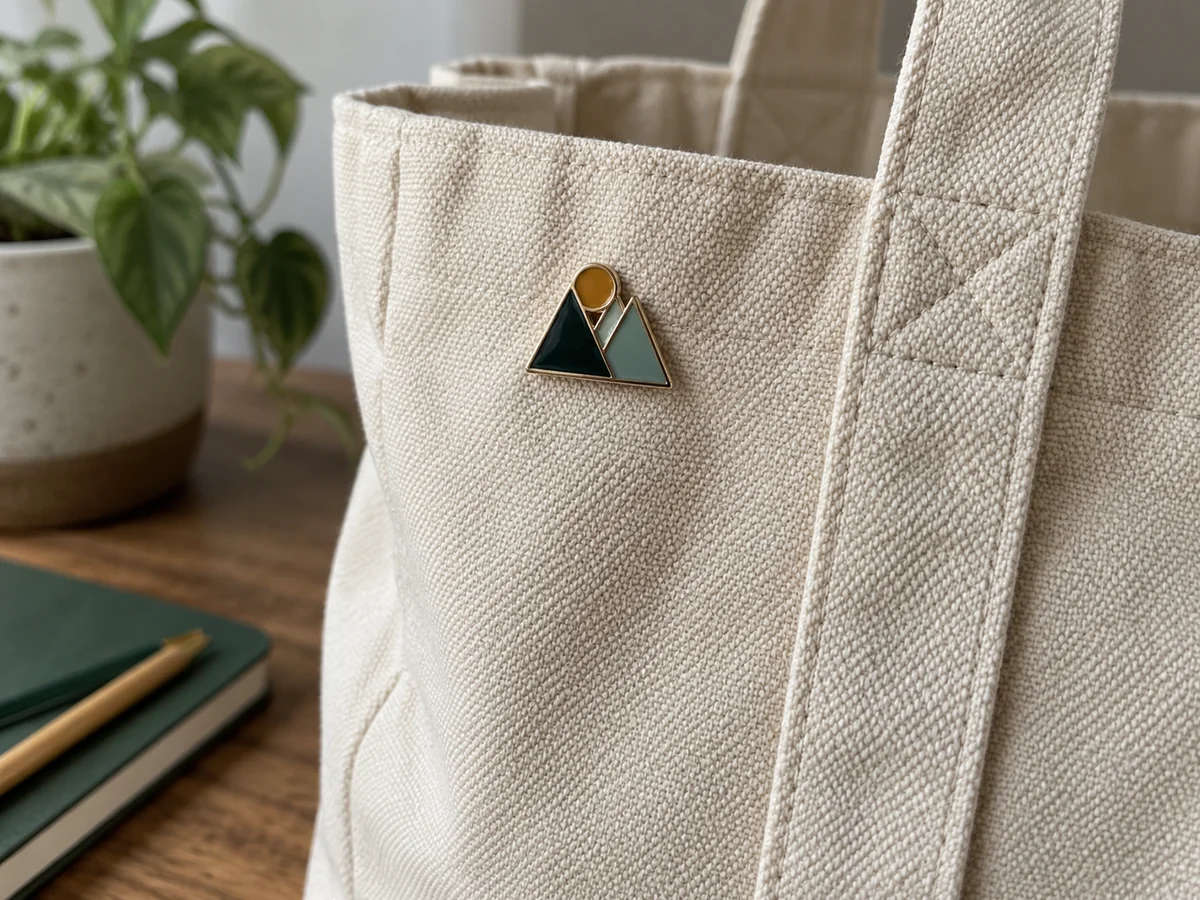
A tiny hole is still a change
A pin can make a plain bag feel personal, but its post has to pass through the material. That leaves a puncture, and removing the pin does not promise an invisible surface afterwards. Think twice before using one on coated fabric, leather, delicate textiles or a bag whose weather resistance matters. A decorative choice is easier to enjoy when you accept the effect on the material first.
Check the bag maker's advice if the surface has a special coating or construction. Do not push a pin through a padded laptop compartment, a protective layer or anywhere it could contact a device. An ordinary canvas pocket may be a more sensible location, though its weave and weight still affect how the pin sits. Use a separate display pouch if you would rather keep the main bag unpunctured.
Look on both sides of the panel
The outside position is only half the decision. Open the bag and see what sits behind it: lining, a pocket, a seam or the place your hand slides in to find your phone. The pin back should not press against a fragile object or scrape your fingers. Avoid stitching lines and heavily loaded handle tabs, where adding holes is an unnecessary alteration to a working connection.
Choose a spot that does not repeatedly hit a table or rub against your clothes. A large pin near the lower edge can catch as the bag brushes a chair, while a sharp decorative outline may snag knitwear. Hold the pin in place without piercing the fabric to picture its position, then check that it does not block a pocket or zipper.
Match the back to the use
Pin backs vary: rubber clutches, metal butterfly-style fasteners and locking designs do not operate identically. Read how the particular back attaches and releases, and make sure it suits the post. A locking back can add a retention mechanism, but it is not a guarantee that a pin cannot be lost. Inspect the connection periodically, particularly after the bag catches or is packed tightly.
Do not force a short post through too many layers just to reach the back. A fastening that is barely engaged may not hold as intended. Likewise, stacking several pins close together can make a flexible panel sag and create a cluster of hard pieces inside the bag. A smaller arrangement may sit better and be less troublesome during everyday use.
Remove pins before cleaning when the care instructions or pin maker call for it, and store the sharp parts safely away from children and pets. If you notice tearing, enlarged holes or a loose post, stop using that location. A favourite bag does not need to become a permanent display surface; a removable pouch can offer the same small expression with fewer compromises.
Further information