Picture a pin at its real size
A close-up photograph can make a tiny pin look substantial. Translate the dimensions onto paper before deciding where it will sit.
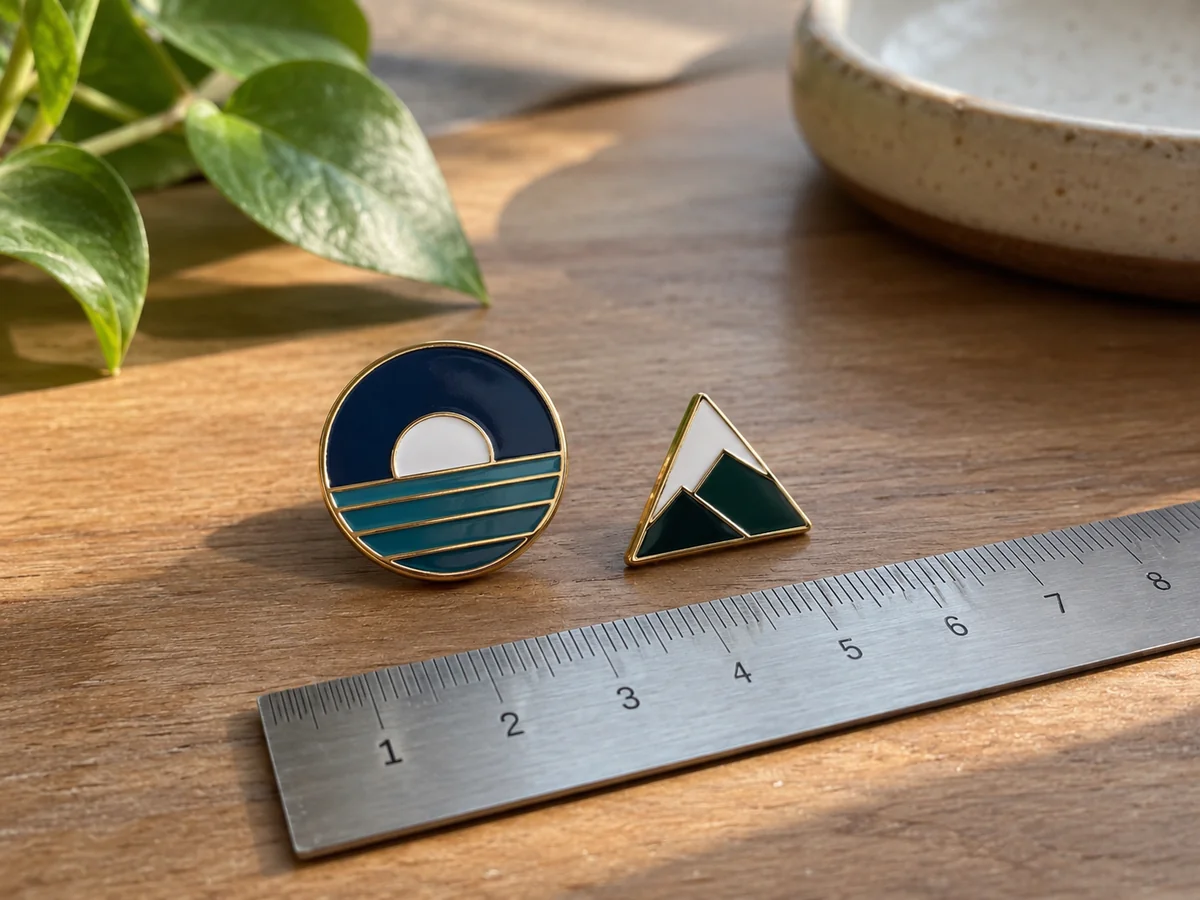
Make the online size visible
A pin photographed alone can fill an entire screen whether it measures a centimetre or several inches. Look for the actual dimensions, then draw a simple outline at that size on scrap paper. Cut it out and place it against the jacket, hat or bag you have in mind. This makes the scale easier to judge than enlarging and shrinking the product image until it seems plausible.
Check what the measurement includes. A width may describe the longest point of an irregular shape, while the main illustrated area is considerably smaller. A round pin's diameter is easier to picture, but the edge can still reduce the available space for lettering. If the listing has only one dimension for a complicated outline, ask for the other rather than assuming it is roughly square.
Read the design at normal distance
Fine text and small details can look clear in a large mockup and become hard to read on the finished pin. View the design at approximately its real size, then step back to the distance from which someone would normally see it. You do not need every small line to be legible from across a room, but the important shape or message should work at the distance you care about.
For a group of pins, leave room between them. Several large pieces can pull a soft fabric panel unevenly or make a pocket flap awkward to use. A smaller pin may fit the space more comfortably without being less expressive. Consider where the edge will end up when a bag bends or a jacket lapel folds, not just how the arrangement looks when everything lies flat.
Size changes the fastening question
A broad pin may need more support against rotation than a tiny one. Check the number and position of its posts, the supplied backs and the weight if the seller lists it. Do not infer those details from the front photograph. On thin fabric, a substantial pin can sag or make the surface pucker even if the clutch stays attached. A sturdier display area may be a better match.
The paper outline is also helpful for checking comfort. Hold it where a strap, seat belt or hand passes and imagine the real object projecting from that point. Leave sharp or projecting designs away from likely contact. Buying a pin in the right scale is less about choosing small or bold in the abstract and more about making the design work in one actual place. A minute with a ruler can prevent a surprisingly common disappointment when the parcel arrives.