Store an unframed print flat and dry
A supported, clean enclosure protects an unframed print better than a convenient gap behind furniture.
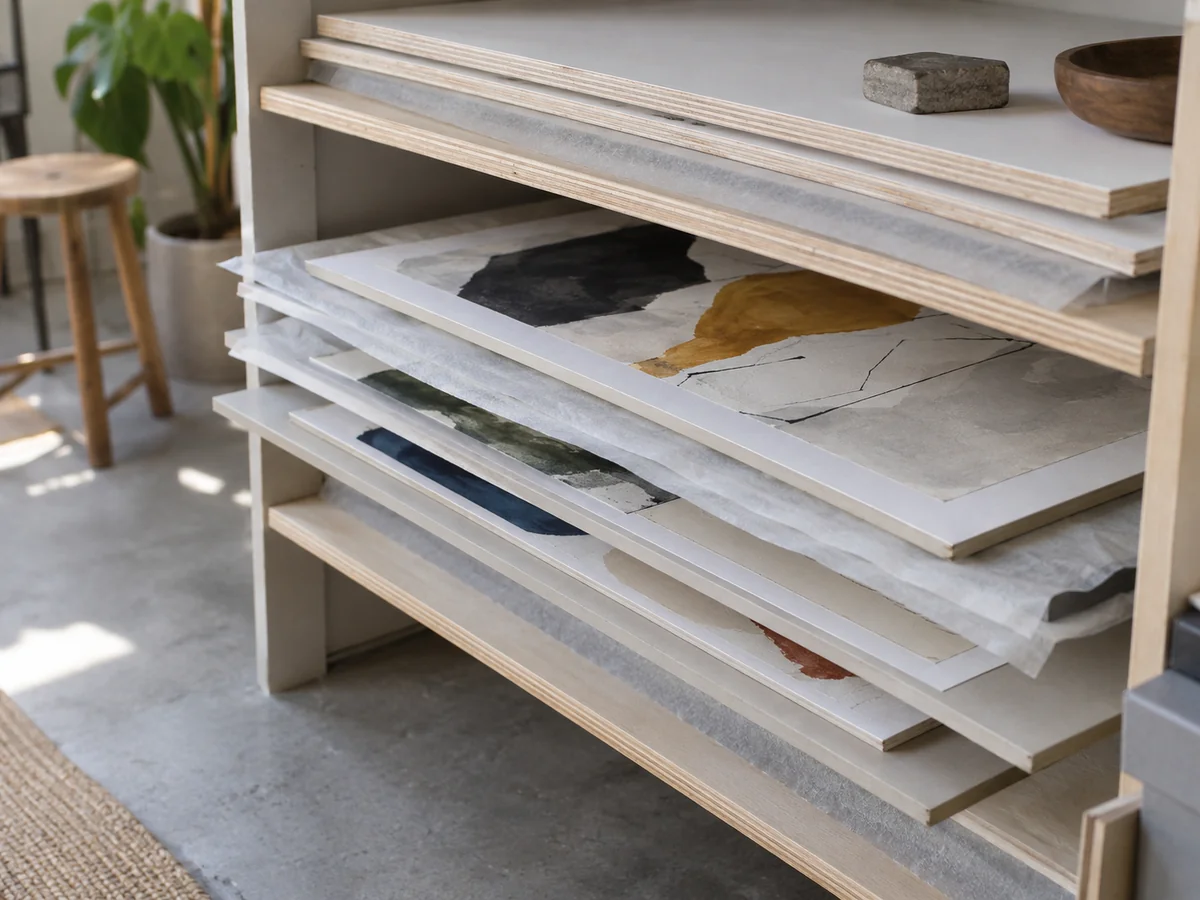
Give the print a place of its own
An unframed print is easy to damage while waiting for a frame. It can slide behind a cabinet, acquire a crease beneath a book or collect a splash from a nearby drink. Choose a storage place before unpacking it. A clean table with enough room to support the whole sheet is a better starting point than balancing it across your knees.
Handle the print with clean, dry hands and avoid touching the image unnecessarily. Support a large sheet as you move it so it does not sag sharply in the middle. Keep food, drinks and pens away from the work area. These ordinary precautions prevent damage that a later frame cannot hide.
For flat storage, use a suitably sized protective folder or enclosure made for paper preservation. It should support the sheet without making you fold the edges. Ask the supplier about compatibility if the print has a delicate or powdery surface; not every clear plastic sleeve is appropriate for every medium.
Do not attach sticky notes, adhesive tape or rubber bands to the artwork. If you need a label, place it on the enclosure. Keep any purchase information separately so it does not press into the printed face or transfer marks during storage.
Make the environment predictable
Choose a clean, stable indoor location away from leaks, radiators and strong direct light. A dry-looking loft or basement can still experience larger changes than a room used regularly. Keep the enclosure off the floor and away from an outside wall that feels damp. You want a place you can check without unpacking half the house.
Flat storage is useful when the sheet can be supported properly. Oversized papers may sometimes need a suitable rolled arrangement, but do not force a fragile print into a narrow mailing tube simply to save space. If it arrived rolled, follow the artist or printer's handling advice rather than flattening it with an iron, moisture or heavy objects directly on the image.
Avoid stacking unrelated heavy items above the enclosure. A folder protects against casual handling; it does not make the sheet immune to pressure or a spill. Leave enough access that you can retrieve the print without dragging its corners along a shelf.
If the print is already stuck, mouldy, torn or badly distorted, seek a paper conservator's advice before attempting a repair. Household tape can create another long-term problem. Good temporary storage should preserve your options for framing later, with the sheet supported, the surface protected and its condition easy to inspect.
Further information