Decide whether a tote seam is repairable
A broken line of stitching and a torn panel need different repairs. Inspect the fabric before deciding to resew.
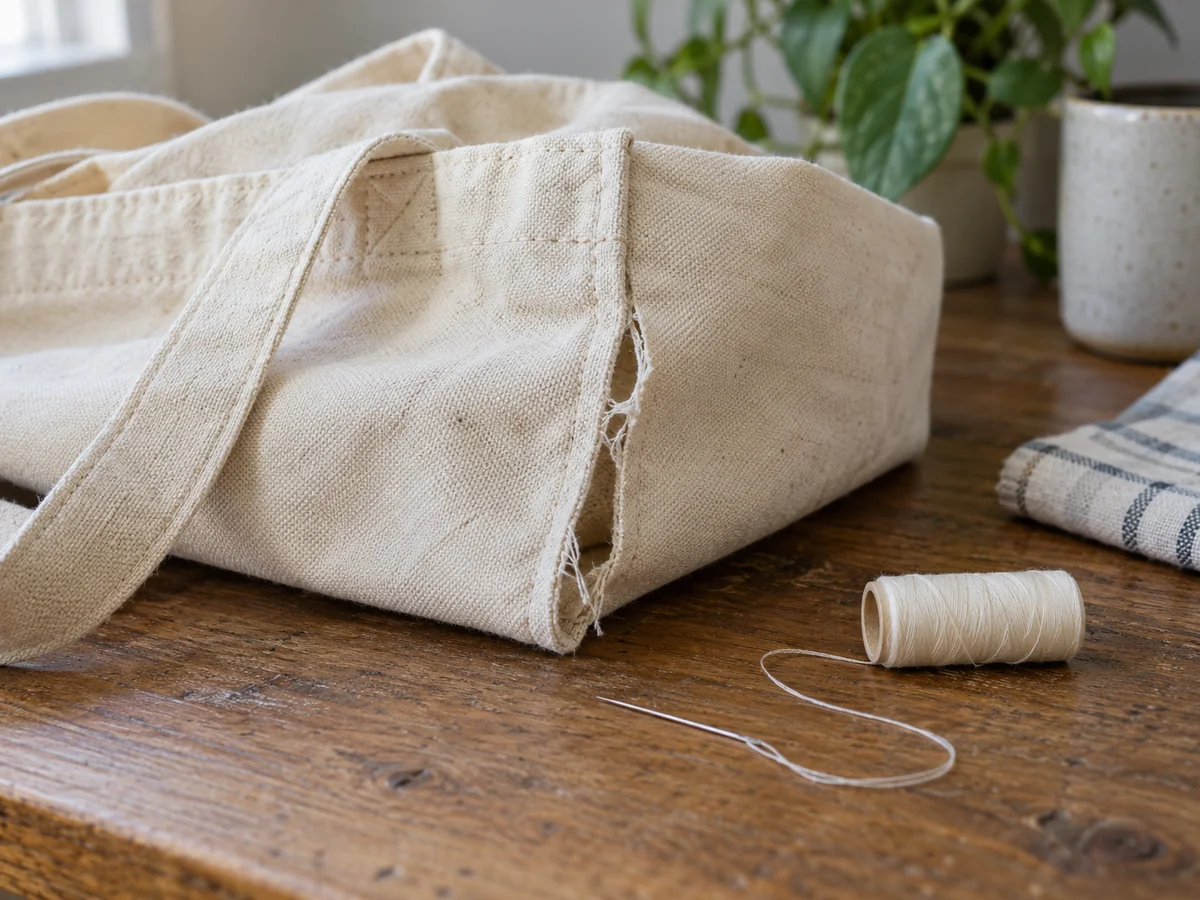
Empty the bag and find the failure
Stop carrying a load in a tote with an opening seam. Empty it, turn it so you can see both sides and inspect the area in good light. A few broken stitches in otherwise sound fabric are a different problem from canvas that has worn thin or torn beside the stitching. Sewing through the same weakened line may simply create another failure.
Check how far the damage extends. Gently examine the surrounding panel, nearby corners and the corresponding seam on the other side. Do not pull the opening wider as a strength test. Photograph the condition if you may ask the maker, a tailor or a repairer for advice.
Match the repair to the construction
If only the thread has failed and the fabric is sound, resewing may be feasible for someone with appropriate skills and equipment. The thread, needle, stitch and seam allowance need to suit the fabric thickness. A domestic machine that struggles with several canvas layers should not be forced through the job. Keep fingers clear of needles and use tools according to their instructions.
Worn or torn fabric may need reinforcement beyond the damaged area. That changes the thickness and how the bag bends. A repairer can assess where sound material remains and whether a patch can distribute stress effectively. An attractive row of stitches is not enough if it sits entirely in weak cloth.
Strap attachments and base corners deserve particular attention because they carry repeated loads. A decorative patch over the visible tear may hide the problem without restoring the load path. Do not treat fabric glue as a universal structural substitute, even if it is convenient for a light decorative application.
Decide what the bag can do afterwards
After an appropriate repair, inspect the seams and begin with a modest, non-fragile load. This is a practical check of the repair in use, not a certified load test. Do not assume the bag has regained any original capacity claim, especially if the fabric itself was weakened. Avoid carrying valuables or heavy objects until you are confident in the work.
A bag with extensive thinning may be better used for light storage or repurposed into smaller items. That can be a useful outcome rather than a failed repair. If the tote is sentimental, professional work may be worthwhile even when a new bag would cost less; explain the importance before agreeing on the approach.
Also consider why the seam failed. Repeated overloading, sharp contents or abrasion at one corner can undermine a new seam again. A repair is most useful when it restores suitable function and changes the habit that caused the damage, rather than merely closing the visible gap for the next identical load.