How to use a flat garment size chart
A flat width is not a body circumference. Follow the diagram and compare it with a garment you already know.
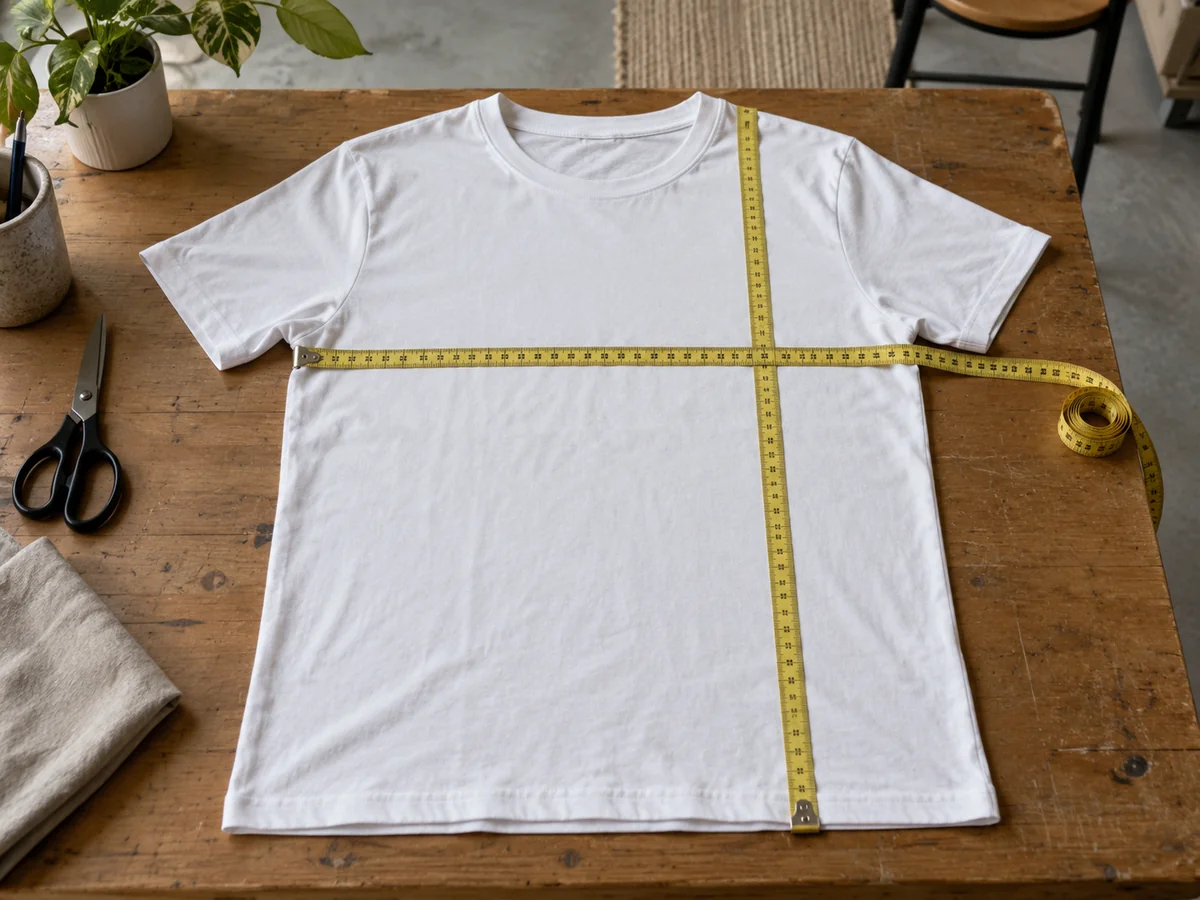
First establish what is being measured
A size chart can describe the body the garment is intended to fit, or the garment itself. Those are different sets of numbers. A flat shirt width measured across the chest is not a circumference around your body. Look for a diagram, a heading such as product measurements and an explanation of the measurement points before choosing a size.
If the page gives only a number labelled chest, ask what that means. Do not assume that doubling it or adding a fixed allowance will solve every ambiguity. A chart should tell you whether it refers to a flat width, a full garment circumference or a recommended body measurement.
Bring a familiar shirt to the table
Choose a similar garment that fits the way you want and has already been washed normally. Lay it on a flat surface, smooth out folds and let the fabric rest without stretching it. Measure across the chest at the stated points. Keep the tape straight rather than following a curved wrinkle or pulling it diagonally.
Measure the length from the same starting point shown in the new chart. The high point of the shoulder beside the neckline is common, but it is not universal. For sleeves, check whether the measurement starts at a shoulder seam or the centre back. A raglan or dropped-shoulder garment makes this distinction especially important.
Write down the reference measurements before checking the sizes on offer. That reduces the temptation to stretch your old shirt until it matches the size you hoped to buy. If the reference garment is already too short or close in one area, note that limitation instead of treating every number as your ideal.
Read a size as a group of dimensions
Compare width, length and sleeve information together. A size that supplies the extra chest room you want may also add more body length than you need. This can point towards a different cut rather than a different size. Boxy, fitted and longline garments are not interchangeable patterns with different labels.
Allow for any stated manufacturing tolerance. A published measurement is usually a target, not a promise that every garment is identical to the millimetre. If your choice depends on a tiny difference, ask the seller and review the return conditions before washing or altering the item.
Keep body and garment measurements clearly labelled in your notes. You can use both, but they answer different questions. A flat chart becomes useful when it is connected to an actual garment and a clear preferred fit, rather than used as a mysterious set of numbers that must somehow match the letter on your usual size.