Put printed clothes away dry and unstressed
Clean, dry clothing and a low-stress fold usually matter more than special storage accessories.
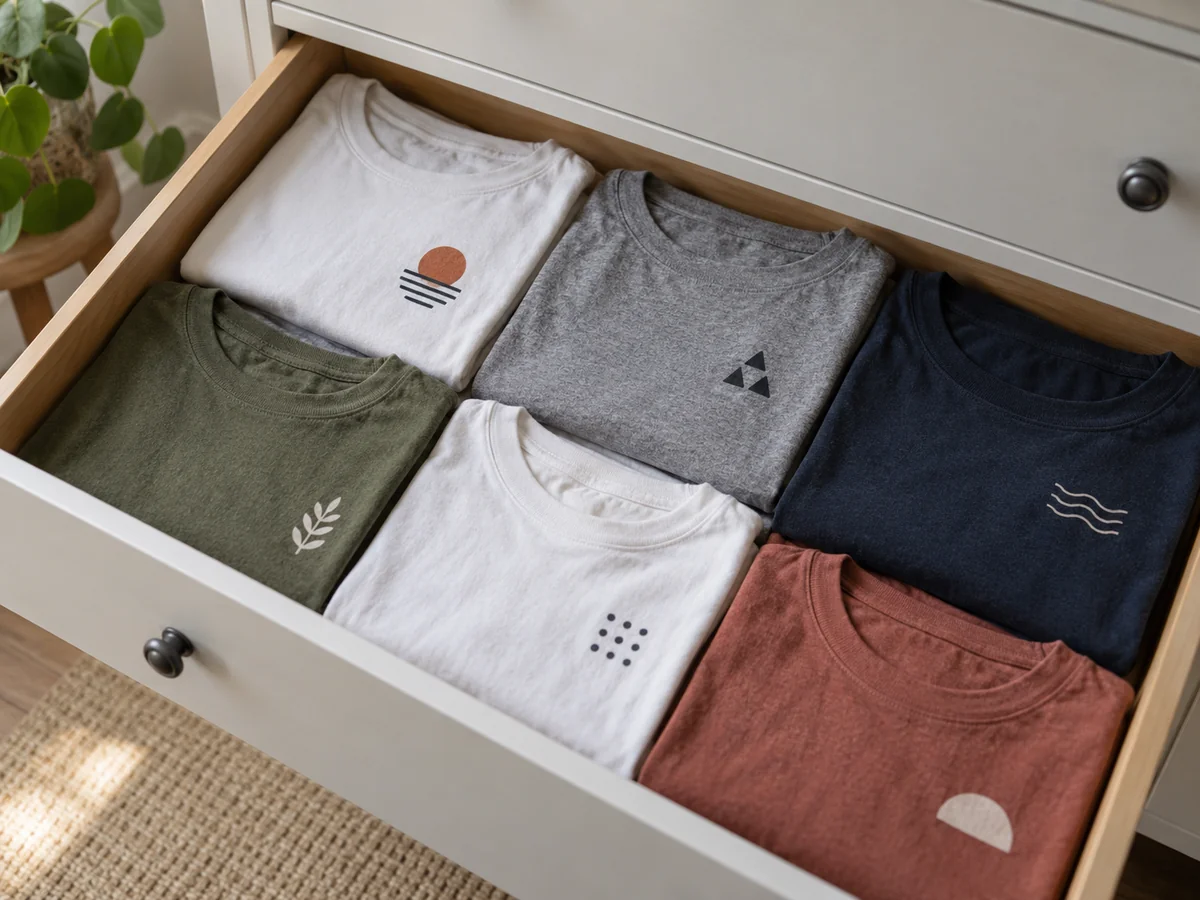
Wait until every part is dry
Before putting printed clothing away, check the seams, cuffs and thick areas as well as the broad fabric panels. A shirt can feel dry across the chest while retaining moisture at a folded hem. Let it finish drying according to the label instead of pressing damp garments into a crowded drawer.
Store clothes reasonably clean. A garment intended for another wear can be aired in a suitable place first, but do not hide a damp, worn hoodie beneath clean tees. Separate laundry that needs attention from items ready for storage. That simple distinction is more useful than adding fragrance to a closed space.
Let the graphic rest
Fold the shirt so the fabric is supported without sharply creasing a thick printed panel if you can avoid it. A different fold may put the bend in plain fabric instead. Do not pull the graphic flat by stretching the shirt around it. The decoration and cloth need to rest together in their normal dimensions.
Avoid crushing a stack beneath heavy objects. If the drawer is too full to close without force, remove some items or use another space. Constant compression makes clothing harder to find and encourages you to drag a shirt out by one edge. A smaller, accessible stack is easier to maintain.
For hanging, use a suitable hanger and follow the garment's care requirements. Heavy knits and damp clothing need particular support. Do not force a broad hanger through a small neck opening. A hanger that produces shoulder points or pulls the neckline out of shape is not solving the storage problem.
Choose a stable place
Keep the storage area away from damp corners, leaks and strong direct light. A bedroom drawer or cupboard is usually easier to monitor than a loft or an unheated outbuilding. Check occasional-use clothing periodically instead of assuming that a closed box has made the environment safe.
For a particularly valuable or historic printed garment, seek textile conservation advice before long-term storage or treatment. Everyday laundry guidance is intended for modern clothing in use, not every fragile collectible. Avoid placing unknown papers, adhesive labels or fragranced products directly against an irreplaceable design.
When you put a shirt back into rotation, inspect it before wearing or washing it. Look for moisture, an unusual smell, a sticking print or damage at a fold. Good storage should leave the garment easy to use again. The basic routine is modest: dry it properly, support its shape and keep the space clean enough that you can notice a problem early.