Dropped shoulders and sleeve length
A lower sleeve junction changes the starting point of the sleeve. Read the whole silhouette before choosing a size.
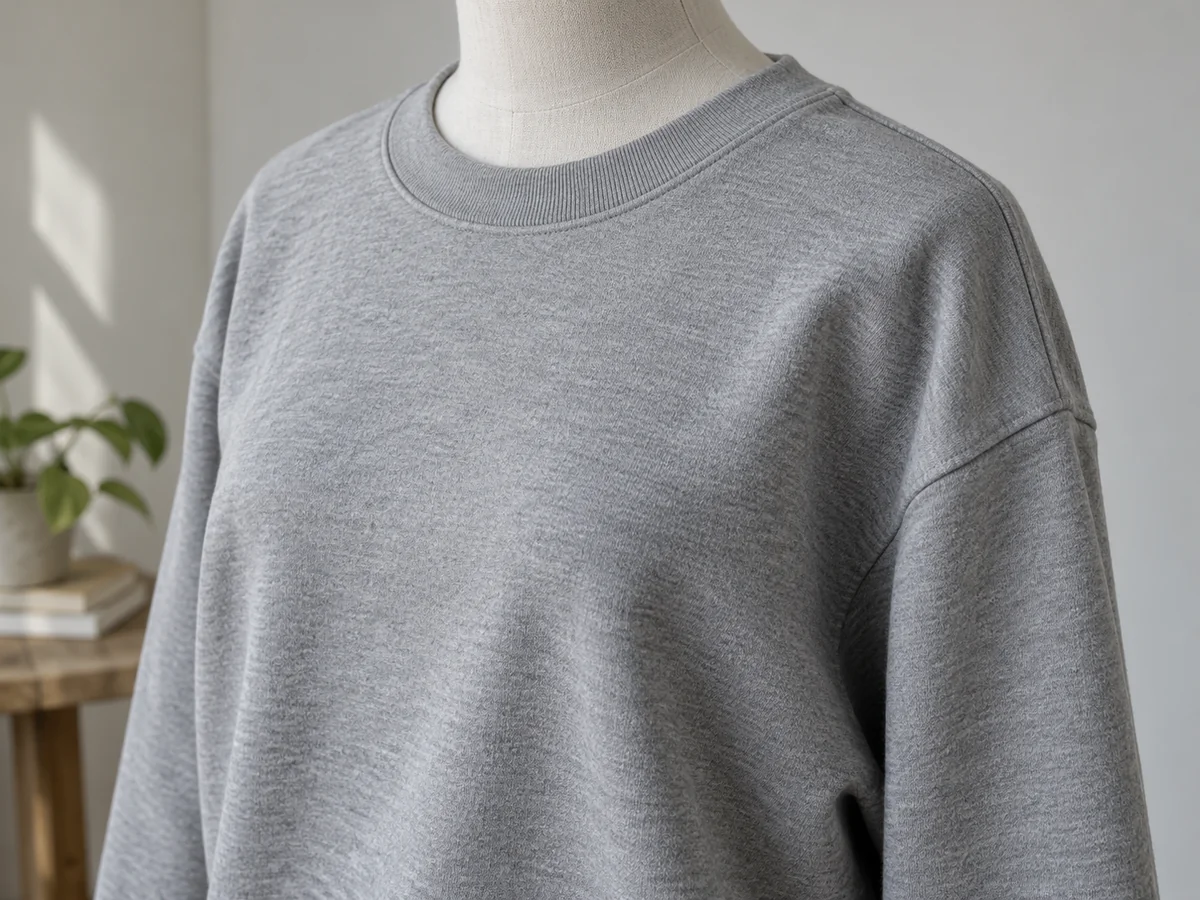
Find where the sleeve starts
A dropped-shoulder sweatshirt deliberately places the seam joining the sleeve and body below the natural shoulder edge. This often accompanies a roomy silhouette, but it does not tell you every dimension of the garment. The body can be short or long, and the sleeve can be slim or broad. Check the actual proportions instead of using dropped shoulder as another word for large.
That lower starting point affects how sleeve length appears. A sleeve measured from its own seam may sound short while reaching well past the wrist once worn. Read the measurement diagram carefully, particularly when comparing it with a conventional sweatshirt whose sleeve begins higher.
Let your arms hang naturally
Put the sweatshirt on and let your arms rest. Check where the cuff sits before pushing it up or rolling it. Then bend your elbows and reach forward. A sleeve that covers part of your hand at rest may finish comfortably when moving, or it may remain too long for your routine. Decide based on use rather than the model's styling.
Inspect the underarm area from the side. A low seam and generous fabric can create folds that feel comfortable on their own but bunch beneath a close coat. If layering is the main purpose, try the sweatshirt under that coat. A smaller size may reduce overall bulk, but it may also shorten the body or change the neck fit.
Look at the whole shoulder line in a mirror. The intended seam will sit low, so do not try to pull the garment upwards until it resembles a set-in sleeve. If you prefer a sharper shoulder outline, a different pattern is usually a more direct solution than repeatedly adjusting a relaxed one.
Use measurements to separate the variables
Compare chest width, body length and the stated sleeve measurement with a washed sweatshirt you already enjoy. Keep the starting points consistent. If only chest width is listed, ask for sleeve and body information rather than guessing from a model whose proportions differ from yours.
Fabric changes the effect of the same cut. A stiff, substantial sweatshirt can hold a broad shoulder line, while a softer one may fall closer to the arm. The product's flat shape and worn photographs both help, but neither replaces a fitting if sleeve position is especially important to you.
Choose a dropped shoulder because you like the relaxed line and the room it provides, with sleeves that remain useful. You should be able to reach for a cup, type or put on a jacket without constantly rearranging the cuffs. That ordinary comfort is a better guide than whether the seam occupies a supposedly correct point on the arm.
Further information