What raglan sleeves change
The diagonal seam changes the construction around the shoulder, but the whole pattern still determines movement.
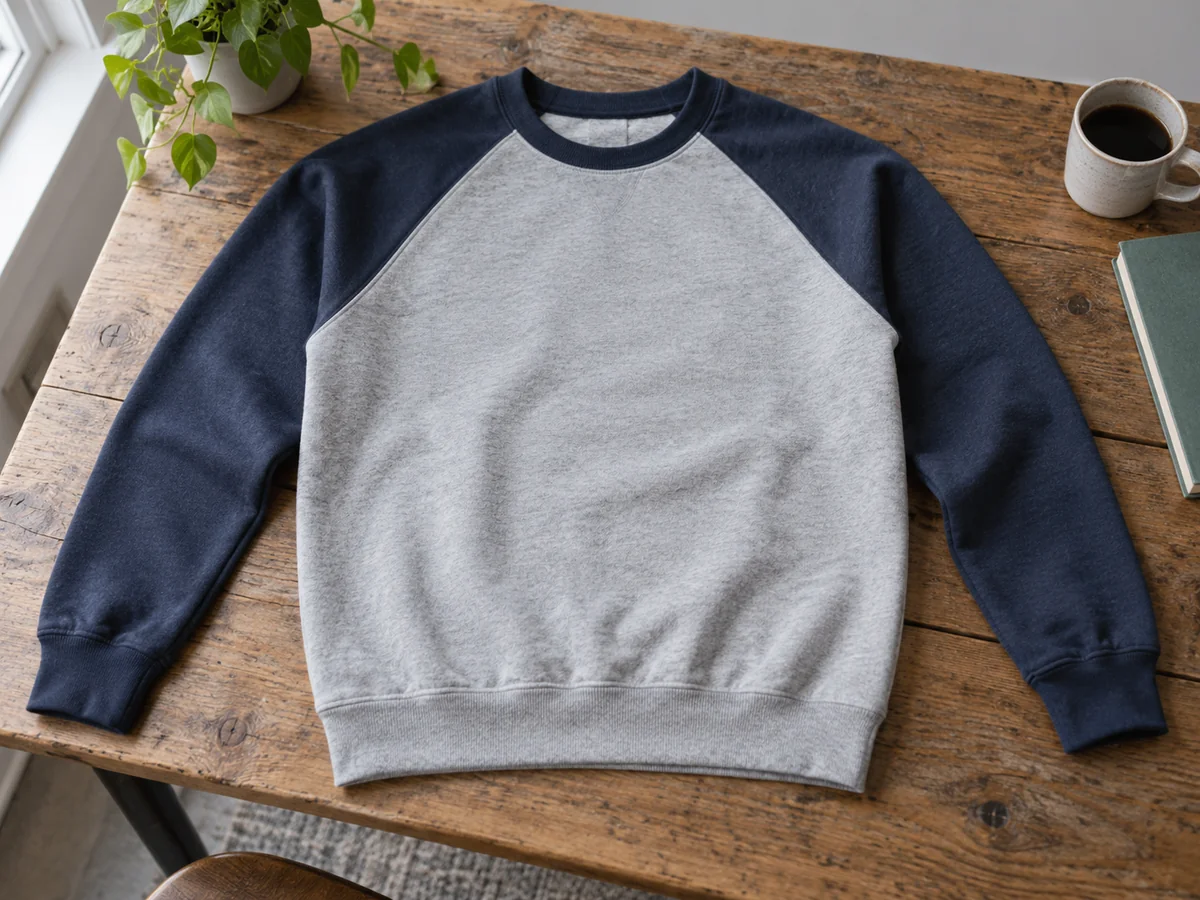
Recognise the seam line
A raglan sleeve extends towards the neckline, with a diagonal seam running from the neck area towards the underarm. It differs from a conventional set-in sleeve, which joins the body around an armhole near the shoulder. On a plain sweatshirt, that diagonal line can be a prominent visual feature or a quiet construction detail.
Because there is no conventional shoulder-to-sleeve junction at the shoulder edge, a raglan can be useful when you dislike that seam in a particular position. However, the construction name does not guarantee that the garment will suit every shoulder shape. The width, armhole and fabric still determine how it fits.
Move before making a judgement
Reach forward as if using a keyboard, then fold your arms loosely. Notice whether fabric pulls at the neck or bunches under the arms. A raglan can feel comfortable, but a narrow body or close sleeve can still restrict you. Conversely, a well-designed set-in sleeve can provide plenty of room. Test the finished garment rather than buying on a promise attached to the seam type.
Try the sweatshirt over your normal underlayer. A long-sleeved tee can change the feeling at the upper arm and elbow, particularly if both garments have substantial fabric. If you plan to wear a jacket over the sweatshirt, check that combination as well. The diagonal seam may be smooth while the total bulk is still inconvenient.
Look at the sleeve from the side. Some raglan patterns give more fabric around the upper arm; others have a closer shape. The word alone does not describe that choice. Product photographs taken with the arms bent or crossed can hide the actual sleeve outline.
Measure from the right starting point
Size charts may measure a raglan sleeve from the centre back neckline or another specified point. A set-in sleeve chart may begin at the shoulder seam. Comparing those numbers directly can suggest a huge difference that comes from the measuring method. Read the diagram and reproduce its path on a garment you like.
Inspect the diagonal seams themselves. They should sit reasonably smoothly when the garment is worn, without obvious twisting or an uncomfortable ridge against the skin. If the sweatshirt uses contrast sleeves, consider whether you enjoy the strong diagonal division as well as the practical fit.
Raglan is a useful option to try when the shoulder area of regular sweatshirts often feels awkward. Keep the decision grounded in movement, layering and measurements. Once those work, the seam can simply become part of a garment you enjoy wearing, rather than a technical feature you have to think about throughout the day.
Further information