What happens at the bottom of a tote
The base affects stability, packing and wear, even when it barely appears in the product photos.
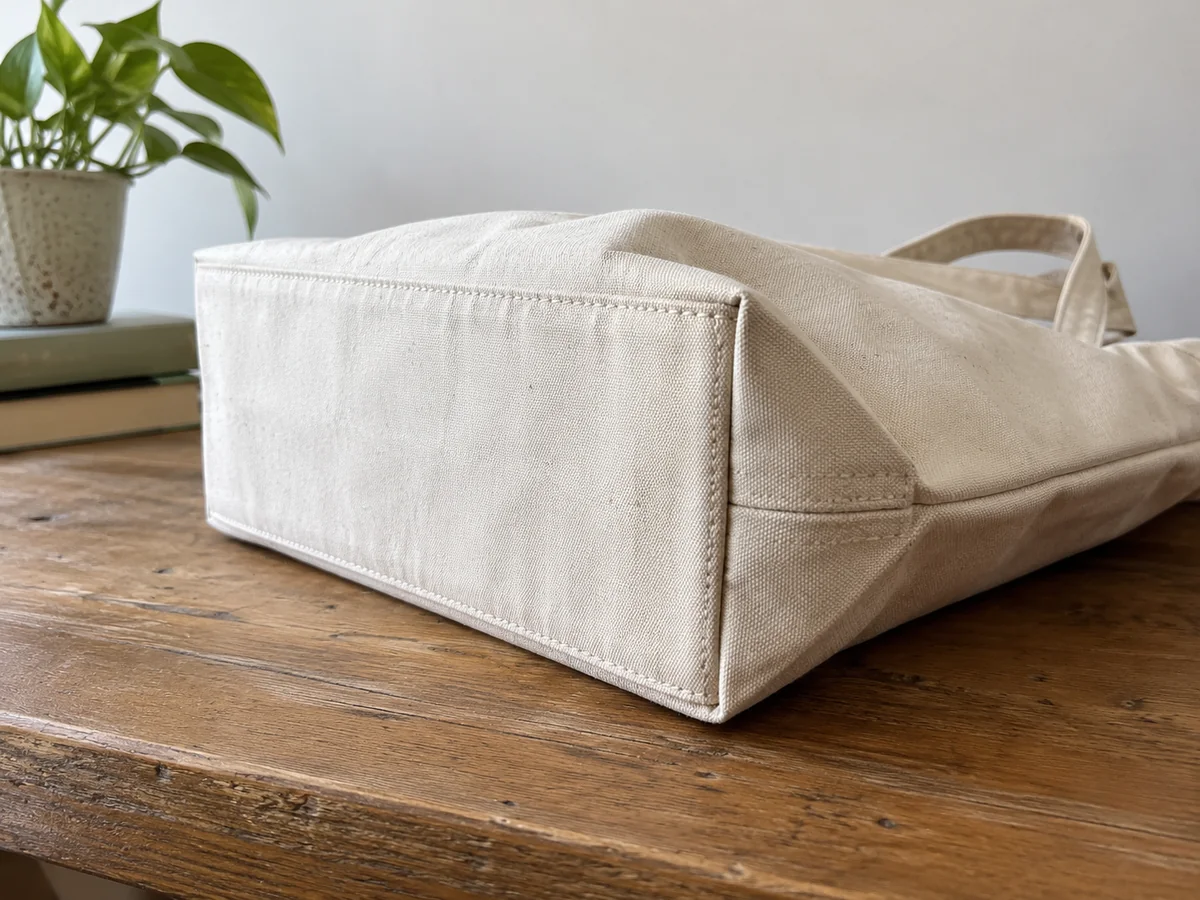
Turn the bag over
Most shopping photographs show the front of a tote, though the bottom does much of the work. It meets floors, supports the contents and folds whenever the bag is set down. Inspect its fabric, seams and corners. A double layer can add protection against wear, while a shaped base may make a lunch box sit more comfortably. Neither feature on its own establishes how much weight the whole bag can carry.
Notice where seams meet the ground. A seam running across the lowest surface can experience repeated rubbing, especially when a heavy object presses above it. Raised corner seams may avoid some contact but still receive strain as the bag flexes. Good stitching should look consistent, without obvious gaps or loose sections. These observations are more useful than assuming a dark bottom panel must be stronger.
Structure is not the same as strength
A stiff insert can help a tote stand up and distribute small items across a flat surface. It can also make the bag less comfortable against your hip or harder to fold. Ask whether the insert is removable and how it should be cleaned. A board of unknown material should not be soaked simply because the surrounding canvas looks washable.
Some bags stand upright only when carefully packed. Soft sides can fall over even with a broad bottom. If you want to reach supplies at a desk without holding the bag open, examine a side view and look for a demonstration with ordinary contents. Upright display photographs may use internal supports, so a neatly posed product does not promise independent stability in daily use.
Pack for the base you have
Place rigid objects so their sharpest corners are not repeatedly pressing into one small point. A protective sleeve around a laptop or sketchbook can also reduce friction between objects, though it does not turn the tote into a padded equipment case. Keep a leaking bottle away from paper and check its closure before placing it inside. A flat bottom makes packing easier, but it cannot contain every spill.
If the tote sags into a narrow shape when lifted, a large hard box may pull at the corners and alter the balance. Try the intended load before committing when possible. A smaller container or a different arrangement may be enough; adding a homemade rigid plate can create new pressure points and should not be assumed to increase the bag's rated capacity.
Look beneath the lining as far as the design allows, without undoing seams. Hidden debris and dampness can collect at the base after shopping or travel. Follow the manufacturer's cleaning instructions and let the whole bag dry before storage. The right bottom is one you can inspect, pack comfortably and care for, rather than simply the thickest-looking panel in the listing.
Further information