A gusset gives a tote useful depth
The folded panels at a tote's sides or base determine how well bulky objects settle inside.
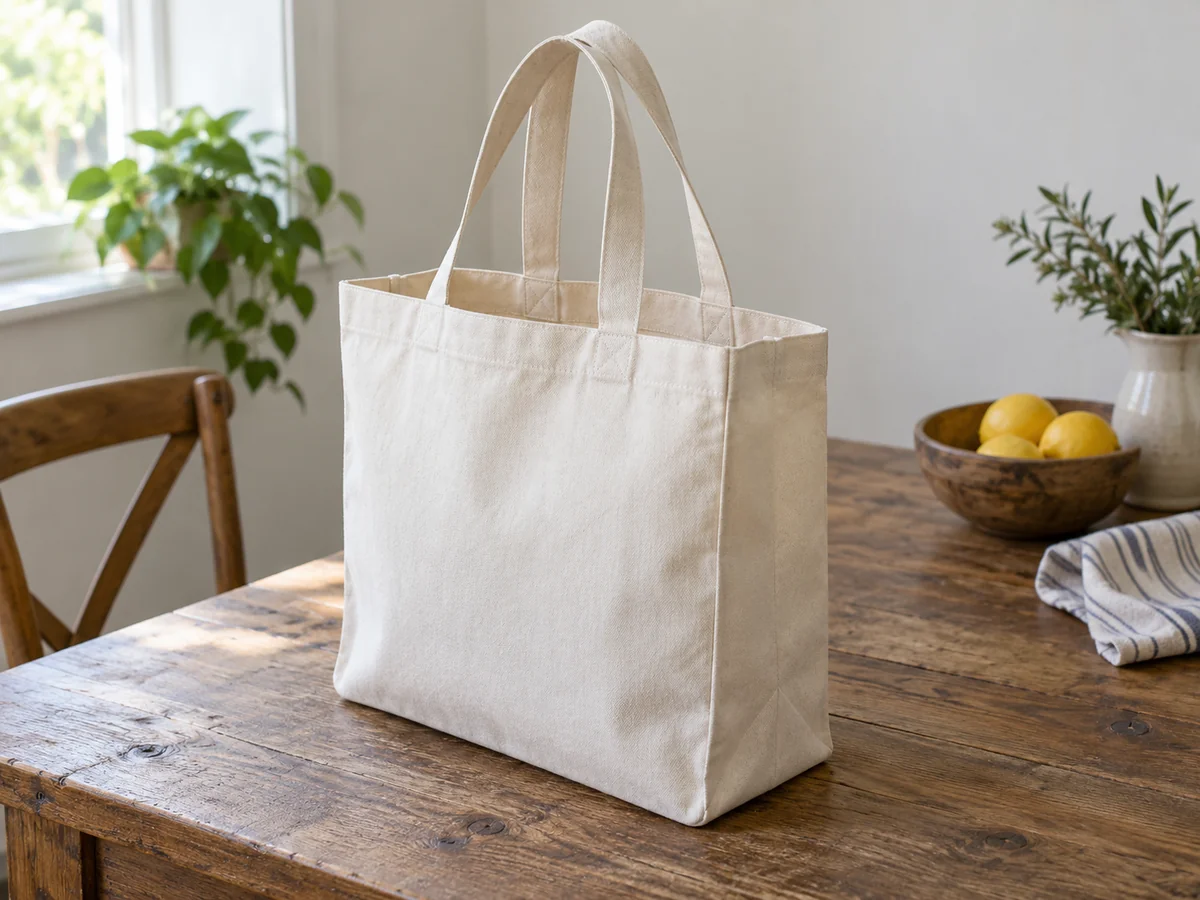
The difference appears when you pack
Two totes can look almost identical lying flat yet behave very differently around a lunch box. One opens into a shallow rectangular container; the other bulges in the middle while its corners remain pinched. The extra fabric that creates depth is called a gusset. It may run along the sides, across the bottom, or around both. Its shape explains more than a front-facing photograph does.
A flat tote is not a poor design. It can be useful for a magazine, a thin notebook or a folded jumper, and it takes little room inside another bag. A gusset becomes valuable when the contents have a base of their own. Food containers, shoes and several books usually settle more predictably when the bag can open beneath them instead of stretching around their widest point.
Find out where the width was measured
Some listings give the width across the open top; others measure the base. These can differ considerably on a tapered bag. Read width, height and depth together and look for a side photograph. If a seller gives only flat dimensions, ask whether the bag has an expanding bottom and how wide that bottom is when opened. A large headline width does not guarantee space for a rigid container.
You can make a simple comparison at home with the object you intend to carry. Measure the length and width of its base, then allow room for your hand and any sleeve or wrapping. A lunch box that exactly matches the advertised bottom may still be difficult to insert because the top opening is narrower, a zipper shortens the entrance or the lining gathers around the corners.
Depth comes with trade-offs
A wide gusset allows more things to stand beside each other. It also makes the loaded bag project farther from your body. That can matter on a crowded bus or when carrying the tote under your arm. If the bag is mainly for a phone, notebook and spare layer, substantial depth might add bulk without solving a real problem. Pack your usual items rather than the maximum possible haul.
Look at how the gusset joins the rest of the body. The base corners and seams experience repeated bending, particularly when a rectangular book or box presses against them. Neat construction and suitable reinforcement are worth examining, but a gusset alone does not establish a safe carrying weight. Fabric, handles and their attachment all contribute to the finished bag's limits.
A structured bottom may stand on a table; a soft gusset may collapse until filled. Neither result can be inferred from depth alone. Decide whether you need upright access, easy folding or room around a specific object. The best gusset is the one that helps your normal load sit naturally, without making you carry an unnecessarily large bag for the rest of the day.