When a tote lining is worth having
A lining can improve organisation and finish, though it also changes weight, visibility and cleaning.
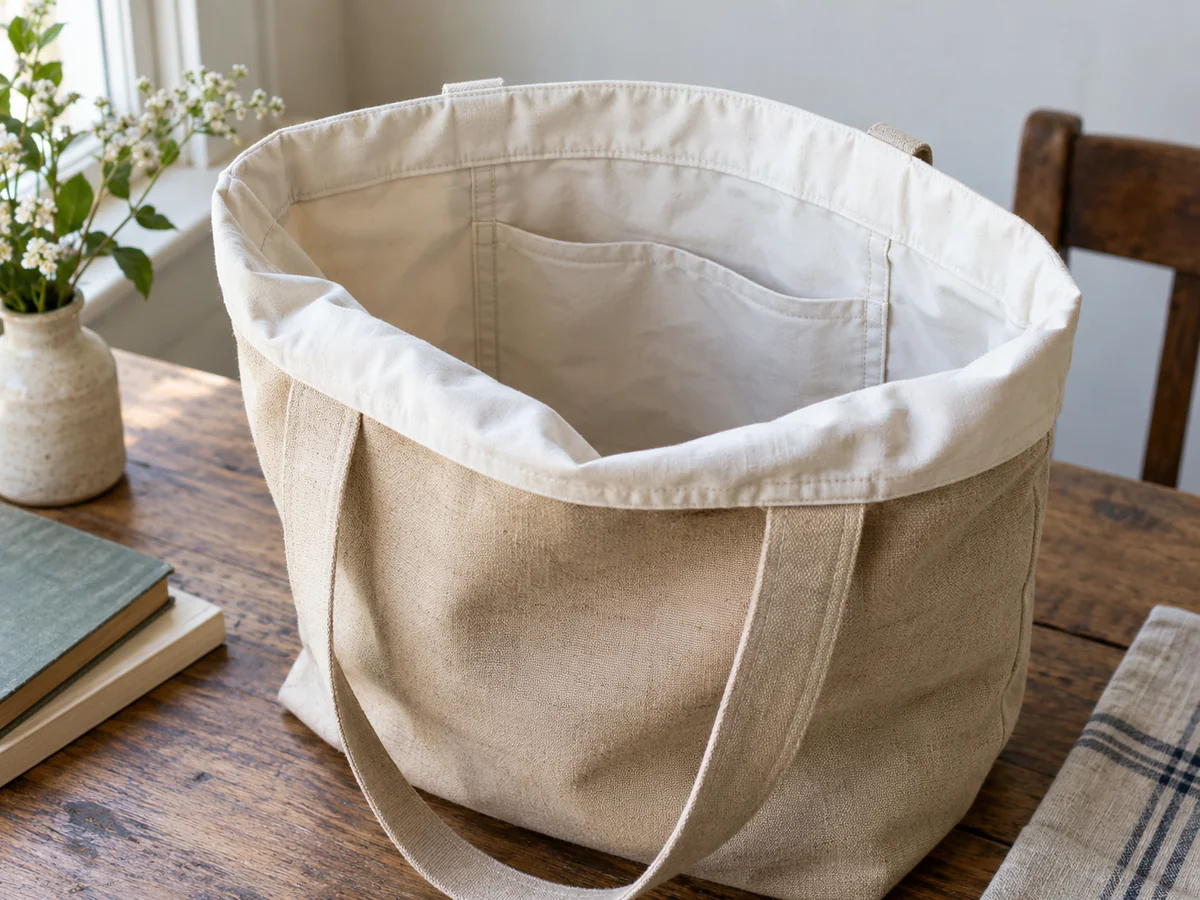
What the extra layer does
Turn a tote inside out, if its construction allows, and the purpose of a lining becomes easier to understand. It can cover seam allowances, provide a smooth interior and create a place to attach pockets without showing their stitching on the outer panel. It may also make the bag feel more finished. These are useful qualities, but they do not mean every unlined tote is incomplete.
For a folded jumper and a few magazines, one well-made layer of canvas can be entirely practical. A lining is more appealing when you regularly carry small loose objects or want a separate zipped pocket. Consider what the extra layer adds to your particular load. Buying it simply because “lined” sounds more premium can mean paying for weight and complexity you do not need.
Look for movement and loose corners
Reach into the bottom corners and see whether the lining lies smoothly. A loose inner bag can bunch when you remove a notebook, cover a small object or pull upwards with your hand. Some movement is normal, particularly in soft bags, but the interior should not feel as though it is following every item out through the opening. Check how securely pocket edges and the upper lining seam are attached.
A smooth lining can help a book or pouch slide into place. A pale one can make a black key fob easier to see. Neither quality guarantees durability: thin fabric might snag on an uncovered pen clip, and a light colour will show some marks readily. Look at the weave and finish rather than deciding only from colour. An interior photograph taken in good light is especially helpful online.
Cleaning needs a complete answer
Water resistance belongs to the finished construction, not to the presence of a lining. Liquid can pass through seams, enter at the top or become trapped between layers. If a bottle leaks, a separate sealed pouch for vulnerable items is usually a more realistic precaution than trusting an unspecified inner fabric. Check specific waterproof claims carefully and remember that an ordinary tote is seldom designed as a dry bag.
Read the care instructions for the entire tote. The outer canvas, lining, printing and any leather trim may have different tolerances for washing. A lining that cannot be drawn out can be slower to inspect and dry after a spill. If your daily use includes food containers or damp gym clothing, straightforward access for cleaning may outweigh the appeal of additional compartments.
Compare empty weights and examine the opening too. Extra material can make a soft bag bulkier when folded and reduce the space around a narrow zipper. A useful lining makes the inside easier to live with: pockets where you need them, visible contents and tidy seams. If the only practical change is that the bag becomes heavier, an unlined version with one removable pouch may suit you better.