Open tote or zip-top bag
A top closure changes access and containment, but it does not make a tote waterproof or secure in every situation.
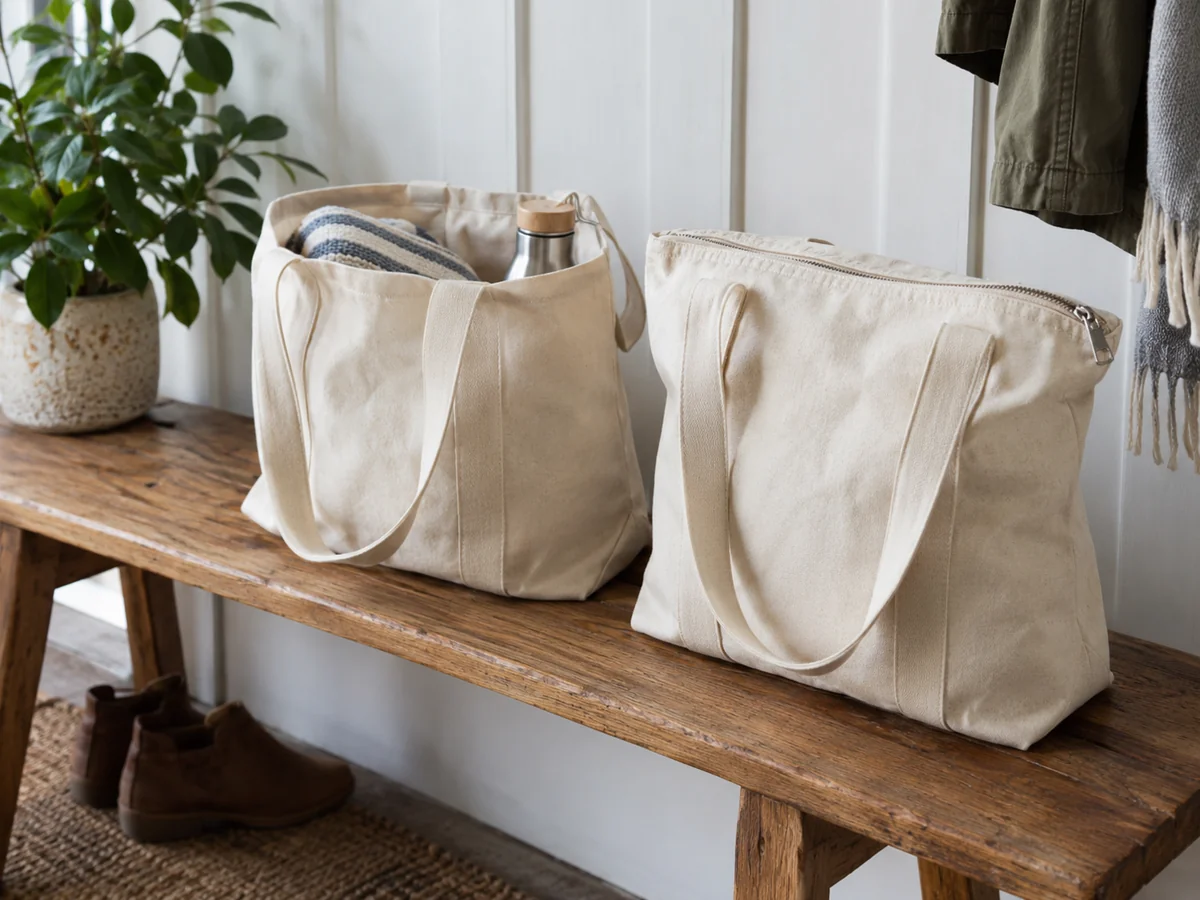
How often do you open the bag?
An open tote is pleasant when you repeatedly put things in and take them out. A library visit, knitting session or quick grocery trip can involve objects that extend beyond the rim. A zip-top version asks you to close and reopen the entrance, but it helps contain small belongings when the bag tips. The useful choice depends on the journey rather than a simple hierarchy of better and worse designs.
Picture the last time your bag was on a train seat or underneath a chair. If its opening frequently leaned sideways, a closure could be valuable. If you usually carry a coat over the top or need to remove a folder without stopping, an open design may work more naturally. Some totes have a recessed zipper panel that can be left open; check whether that panel folds out of your way.
The entrance is smaller than the body
A tote can have generous dimensions and a surprisingly narrow zipped opening. End stops, folded tabs and the shape of the top panel all affect access. Measure the widest rigid object you carry, including its sleeve, and compare it with the usable entrance. A laptop that fits the interior is not much use if you have to force it past the zipper every morning.
Operate the closure with a realistic load inside. You should not need to squeeze the sides hard together or hold books away from the teeth. YKK cautions against forcing a zipper closed on an overfilled bag, because excessive strain can damage the fastening or fabric. If the last section only closes with considerable effort, remove something rather than treating resistance as a challenge.
Containment has limits
An ordinary zipper can leave gaps at its ends and does not establish water resistance. Rain can enter through the teeth, seams or surrounding cloth. Protect paper and electronics according to the actual weather and the maker's stated design. A bag described as having water-resistant fabric may still lack a weather-resistant closure, and those are separate details worth checking.
Likewise, a closed top is not a substitute for watching your belongings. It adds a step before something falls out or is reached, but it does not make a tote theft-proof. Small valuables can live in a separate interior compartment when available. Check that you can locate its pull without opening the entire bag wider than necessary in a crowded setting.
If you alternate between errands and commuting, a zip top that parks neatly when open is a useful compromise. Examine the zipper ends and handles together: straps should not block the pull, and the panel should not steal the space your arm needs. Choose a closure you will actually use, rather than a feature that remains open because it is inconvenient every time.
Further information